Eighteen connected categories from proto-currency and early state issues through Tokugawa systems, modern yen, commemoratives, and future research scope.
日本
01
Before the late 7th century
Pre-coin money and proto-currency
貨幣以前・原始貨幣
Commodity money, imported objects, and early silver forms before state cast coinage.
02
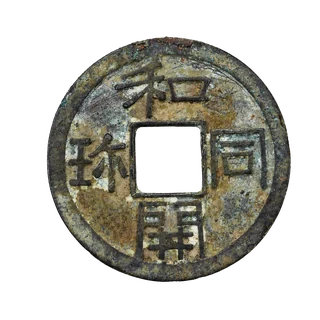
Representative contextual image: Obverse and reverse of the Wadō Kaichin excavated at the Sūfuku-ji Temple site.↗Late 7th–10th centuries
Early state issues
古代国家鋳貨
Fuhonsen, Wado Kaichin, and the state-issued coin sequence traditionally grouped as imperial court coinage.
03
11th–16th centuries
Imported and private cash circulation
渡来銭・私鋳銭流通
Commodity money, imported Chinese cash, imitations, and locally cast money circulated across overlapping markets.
04
Mid-16th–early 17th centuries
Sengoku and unification gold and silver
戦国・統一期金銀貨
Mining, warlord issues, oban, and early unification coinage preceded Tokugawa standardization.
05
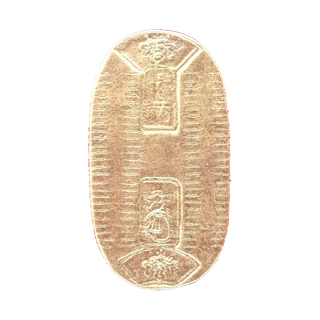
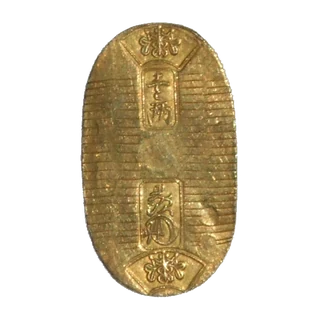
Representative contextual image: Exact documented obverse of an 1859 Ansei Koban photographed at the Toi Museum.↗1601–1867
Tokugawa tri-metallic system: gold
徳川三貨制度・金貨
Ryo-denominated koban, ichibukin, and related gold series in the Tokugawa system.
06
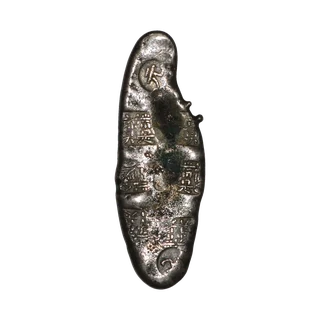
Representative contextual image: One face of a representative Genroku Chogin.↗1601–1868
Tokugawa tri-metallic system: silver
徳川三貨制度・銀貨
Chogin and mameitagin were principally valued by weight, while later silver denominations added counted units.
07
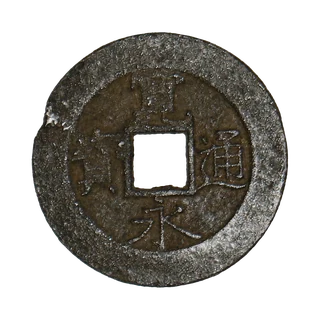
Representative contextual image: Obverse and reverse of a representative four-mon Kan'ei Tsūhō.↗17th–19th centuries
Tokugawa tri-metallic system: copper and iron
徳川三貨制度・銭貨
Kanei Tsuho and related mon coinage supplied counted small change in copper, brass, and iron.
08
Representative contextual image: Obverse and reverse of a representative Man’en Koban, retaining its oval form.↗1850s–1868
Bakumatsu foreign-trade crisis
幕末開港・貨幣危機
Foreign trade, gold outflow, emergency recoinages, and exchange-rate stress destabilized the late Tokugawa system.
09
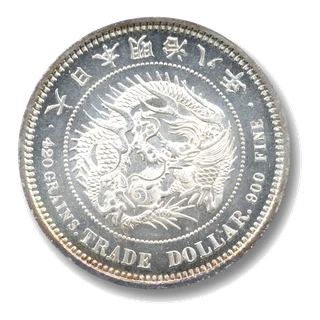
Representative contextual image: Obverse and reverse of a Meiji 8 (1875) Trade Yen of Japan.↗1868–1871
Early Meiji transition
明治初期移行期
Old ryo-based money, new government issues, and inherited notes overlapped before decimal yen reform.
10
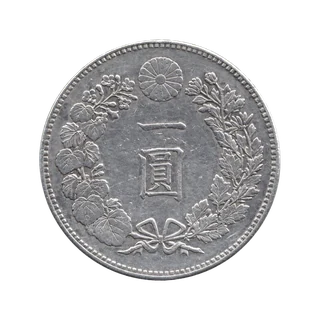
Representative contextual image: Obverse and reverse of an 1889 Meiji 22 one-yen silver coin.↗1871–1912
Meiji modern coinage
明治近代貨幣
The New Currency Act introduced yen, sen, and rin with Western-style machine production.
11
1912–1926
Taisho coinage
大正貨幣
Decimal yen coinage continued through changing metals and postwar economic conditions.
12
1926–1945
Early Showa and wartime coinage
昭和前期・戦時貨幣
Metal substitution and emergency materials document escalating wartime constraints.
13
1945–1958
Occupation and postwar reconstruction
占領期・戦後復興貨幣
Postwar redesign, small-denomination reform, and new 1-, 5-, 10-, 50-, and 100-yen types rebuilt circulation.
14
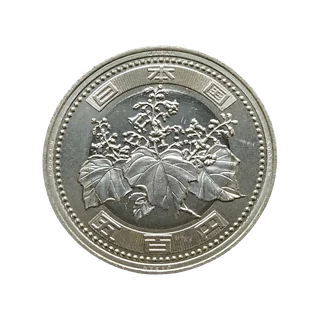
Representative contextual image: Obverse and reverse of the 2021 Reiwa 3 bicolor-clad 500-yen coin.↗1959–present
Modern circulation coinage
現代流通貨幣
Six currently issued denominations coexist with older designs that remain legally valid.
15
1964–present
Circulation-channel commemoratives
引換型記念貨幣
Commemorative legal tender distributed at face value through financial-institution channels.
16
1986–present
Premium commemoratives
プレミアム型記念貨幣
Precious-metal and advanced-technology legal tender sold above face value as collector products.
17
Modern
Programs, sets, and mint products
記念事業・貨幣セット・造幣局製品
Multi-issue programs, proof sets, mint sets, and medals require object-class boundaries.
18
1895–1945
Colonial and occupation issues: future scope
植民地・占領地貨幣(将来範囲)
Former colonial and occupation issues need territory- and authority-aware research before public expansion.
Overlap is intentional
Political authority, legal accounting, market practice, metal, and collector terminology did not always change together. A series may therefore belong to more than one period category.
Evidence
Sources and scope
These links support the claims on this page. Source authority does not imply permission to republish source images.
Currency Museum: Japanese Currency FAQs and historical overviewCurrency Museum, Bank of Japan
Early Japanese coinage, Wado Kaichin qualification, square-holed coin context, Edo monetary units.
Open source ↗Historical events and currencies in useCurrency Museum, Bank of Japan
Ancient through modern chronology, Tokugawa tri-metallic system, Kanei Tsuho, koban, Meiji yen transition.