The Libertas Americana medal uses a youthful Liberty and the infant Hercules to celebrate American independence and French support.
The catalog includes original medal formats plus later restrikes, fantasies, and related adaptations; the 1781 metadata date is not the manufacture date of every row.
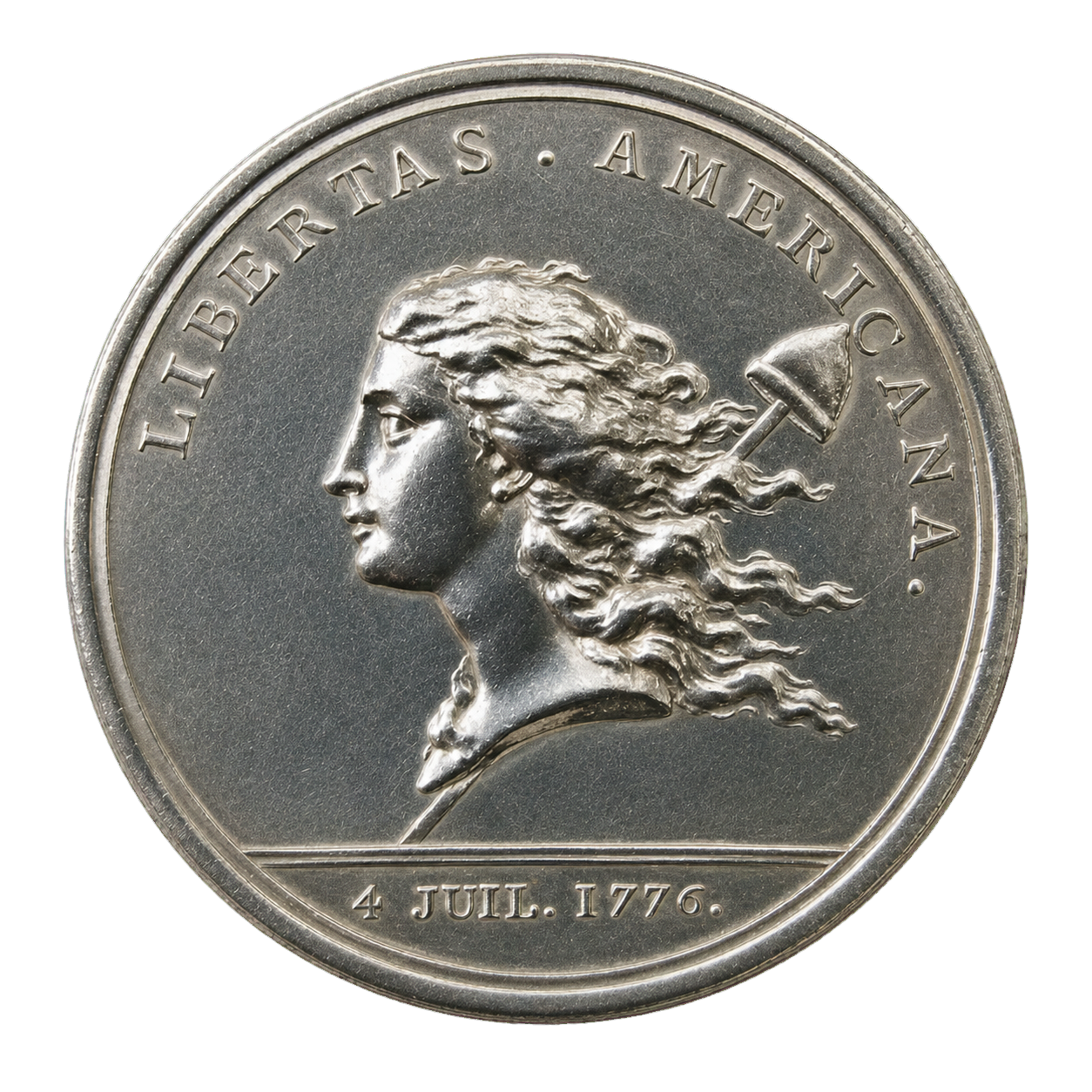
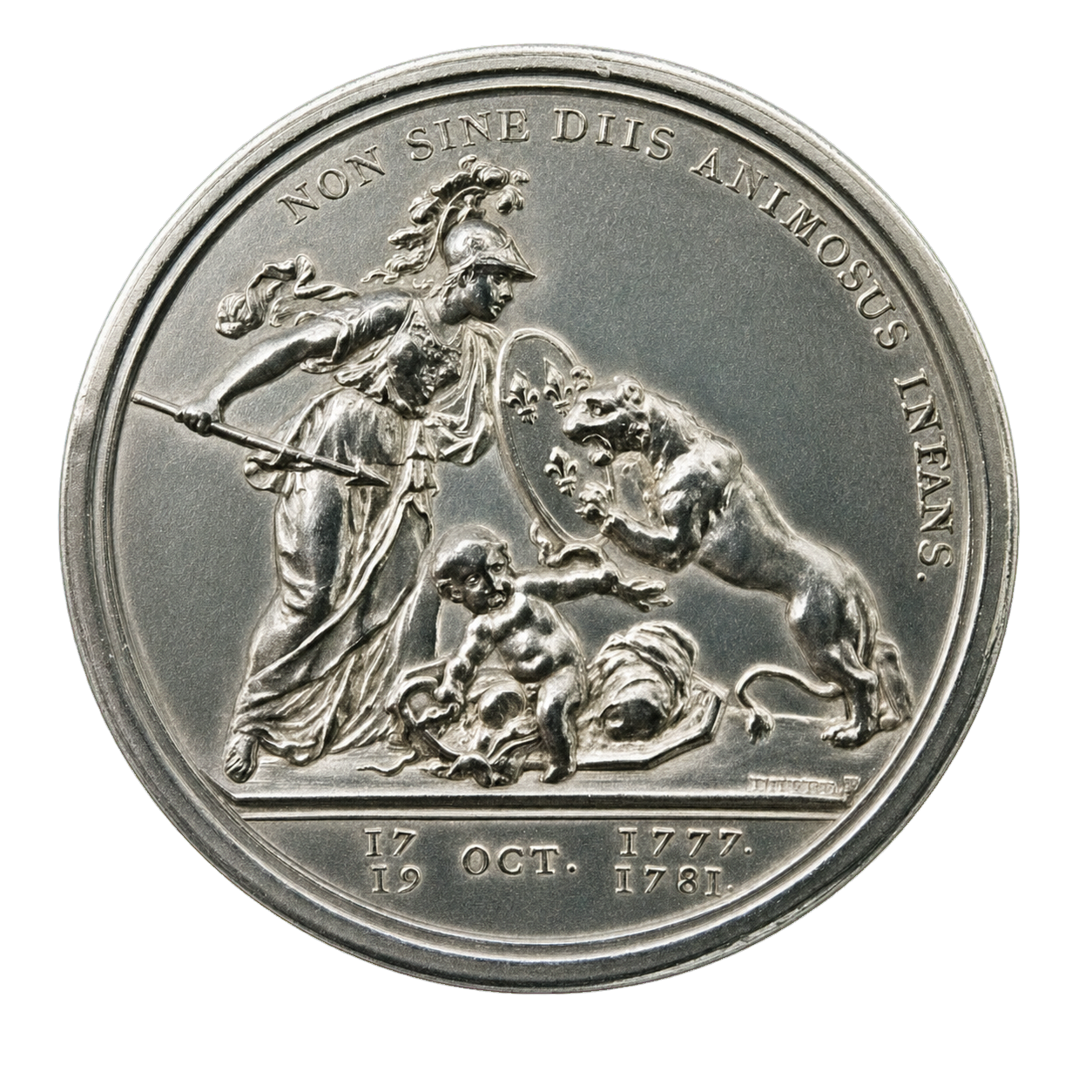
Representative same-object obverse and reverse. Mode A presentation polish removed only the source background; coin surfaces and diagnostics were not reconstructed.
Identity and classification
- Object class
- Medal, restrike, or later adaptation
- Authority
- Franklin–Dupré medallic project and later makers
- Classification boundary
- Medallic object · the inscribed 1776 date is not always manufacture date
- Catalog status
- Mixed originals, restrikes, fantasies, and adaptations
Revolutionary diplomacy in medallic form
Benjamin Franklin developed the concept in France, and Augustin Dupré translated it into one of the era's most influential medal designs.
Later restrikes and adaptations extended the imagery far beyond the first Paris medals.
Obverse, reverse, and the details that identify the type
Confirm the major design, date, and mint mark before studying smaller die differences.
The main portrait and date
Liberty faces left with flowing hair, a liberty cap on a pole, and the date 4 JUIL. 1776 below.
Denomination, subject, and mint mark
The infant Hercules confronts serpents while Minerva shields him from the British lion; dates record Saratoga and Yorktown.
Attributed object catalog
Rows preserve the current classification; blank production is unknown, not zero.
Attribution and authenticity
Separate Paris originals, official restrikes, private copies, and fantasy denominations using metal, edge, diameter, die state, and provenance.
Issuer and production
Production methods, issuing authority, and intended use vary across this catalog; do not infer a federal mint process from the page layout.
Authenticity
Confirm weight, diameter, metal, edge, manufacture, and multiple repeatable diagnostics with a trusted specialist reference.
Grading
Separate circulation wear from weak strike, planchet flaws, corrosion, cleaning, tooling, repairs, mounts, and other post-production changes.
Rarity
A low catalog count or famous name does not by itself establish rarity; exact attribution, survival, condition, and demand all matter.
Provenance
Retain labels, envelopes, invoices, auction references, prior attributions, and collection history; provenance is evidence, not decoration.
From one type coin to a complete catalog
- One representative coin: Choose one problem-free, readable example and learn the size, edge, and major design.
- Major-type set: Use one coin per major design to show changes in artwork, composition, or production.
- Dates and mints: Work through the issue catalog by date and mint, defining special finishes separately.
Sources and image provenance
- Libertas Americana — Smithsonian National Museum of American History
- National Numismatic Collection — Smithsonian National Museum of American History
- Libertas Americana Medals category reference — PCGS CoinFacts