Massachusetts silver moves from austere NE punches to Willow, Oak, and Pine Tree designs in multiple denominations and planchet formats.
The catalog covers normalized Massachusetts silver types conventionally dated 1652 through the final 1662 issues.
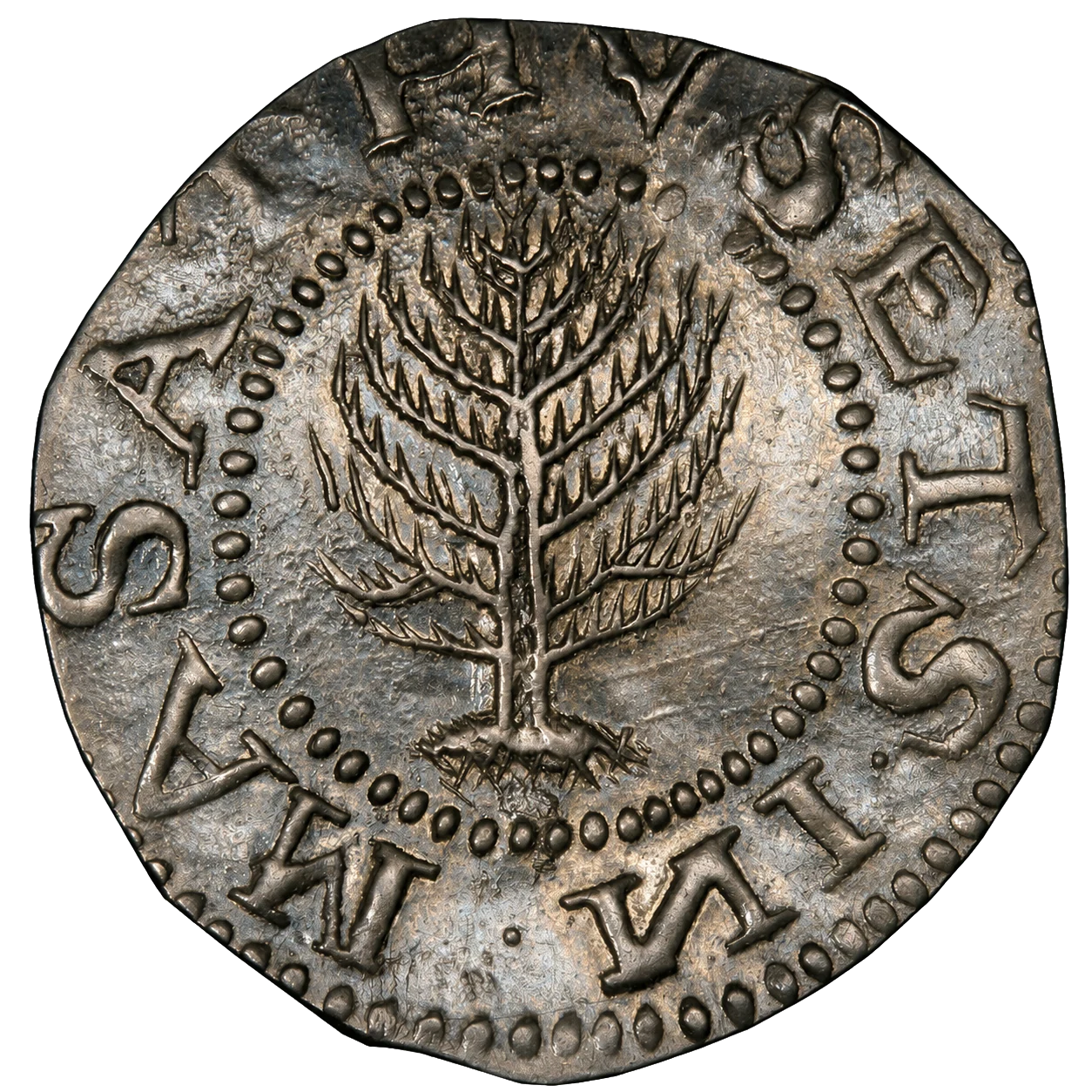
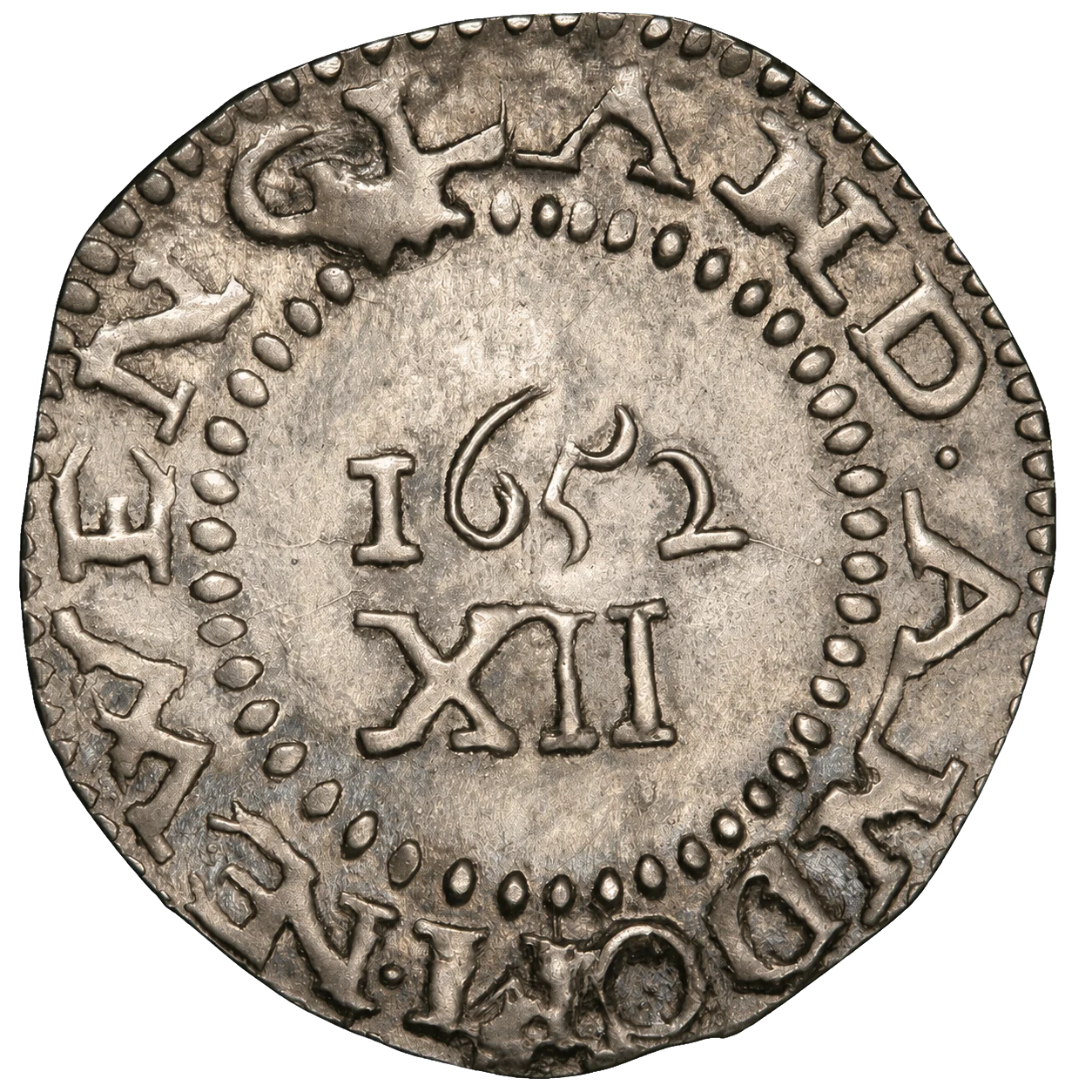
Representative same-object obverse and reverse. Mode A presentation polish removed only the source background; coin surfaces and diagnostics were not reconstructed.
Identity and classification
- Object class
- Colony-authorized silver coin
- Authority
- Massachusetts General Court
- Classification boundary
- Original colonial coinage · denomination and die family required
- Catalog status
- Substantial structured catalog
Local silver under a conventional date
The Massachusetts Bay Colony struck silver for regional commerce when dependable small money was scarce.
Many later tree coins retained the date 1652, so the inscription is not always a literal production year.
Obverse, reverse, and the details that identify the type
Confirm the major design, date, and mint mark before studying smaller die differences.
The main portrait and date
Early pieces use NE punches; later coins show a named tree with MASATHVSETS or a related legend.
Denomination, subject, and mint mark
Roman-numeral denominations, NEW ENGLAND legends, and the conventional 1652 date distinguish values and types.
Attributed object catalog
Rows preserve the current classification; blank production is unknown, not zero.
Attribution and authenticity
Use denomination, tree family, planchet, legends, edge, and specialist Noe/Crosby-style die attribution together.
Issuer and production
Hand-cut dies, irregular planchets, and changing tree devices make production evidence visible on each coin.
Authenticity
Confirm weight, metal, edge, fabric, punch style, and several die markers; crude shape alone is neither proof nor disproof.
Grading
Judge wear separately from weak strike, clipping, planchet fissures, bends, tooling, and later surface alteration.
Rarity
Rarity changes sharply by denomination, tree family, die marriage, planchet quality, and problem status.
Provenance
Older collection records and a traceable chain of ownership materially strengthen attribution and authenticity review.
From one type coin to a complete catalog
- One representative coin: Choose one problem-free, readable example and learn the size, edge, and major design.
- Major-type set: Use one coin per major design to show changes in artwork, composition, or production.
- Dates and mints: Work through the issue catalog by date and mint, defining special finishes separately.
Sources and image provenance
- Pine Tree Shilling, Massachusetts, 1652 — Smithsonian National Museum of American History
- National Numismatic Collection — Smithsonian National Museum of American History
- Massachusetts Silver Coins category reference — PCGS CoinFacts