This large catalog links contract coinage, merchant tokens, medals, regional trade pieces, and other non-state issues of the early republic.
Twenty-two type groups and 112 current issue rows span 1778–1820; legal-tender status and place of manufacture vary by row.
Verified side pair Mode A · presentation polish
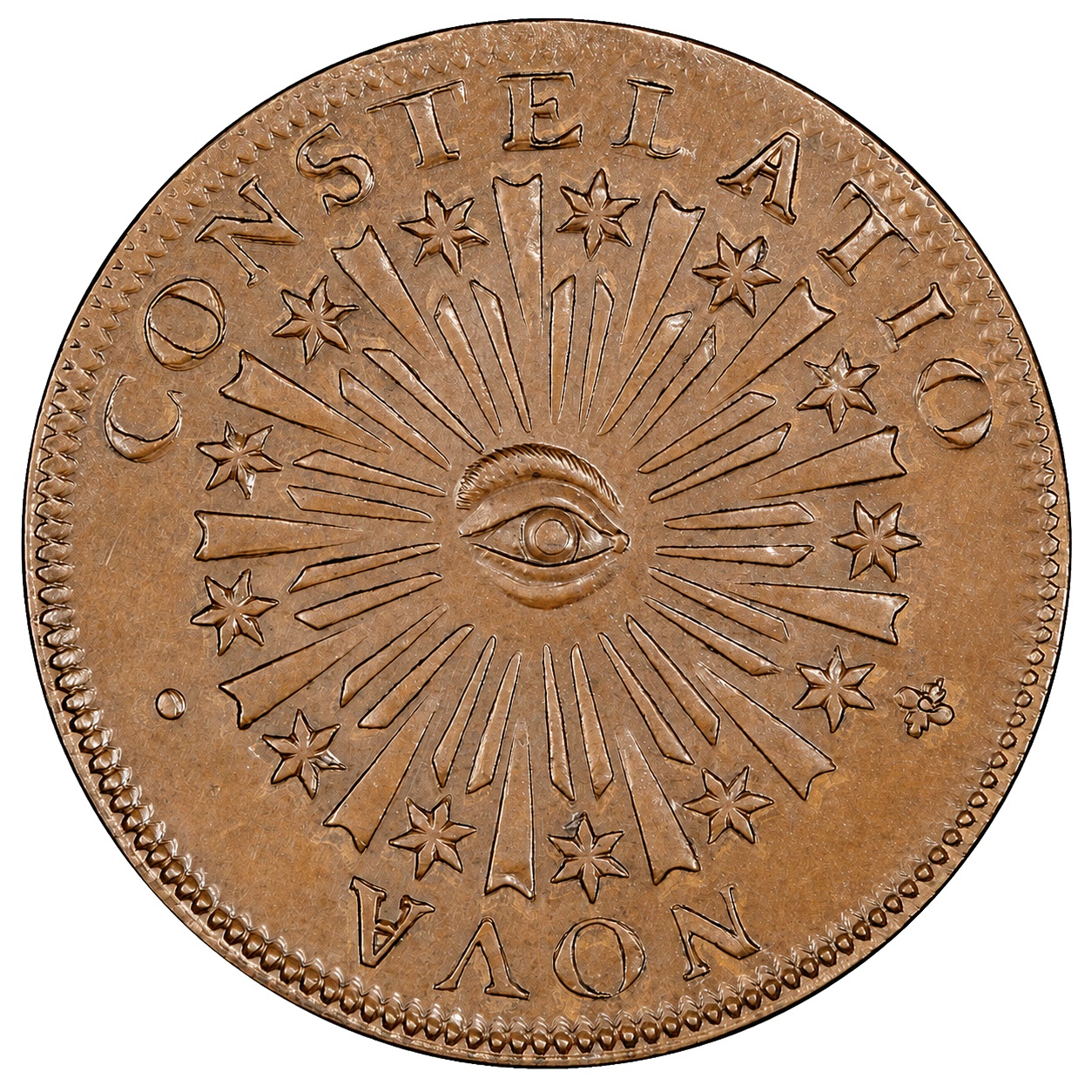
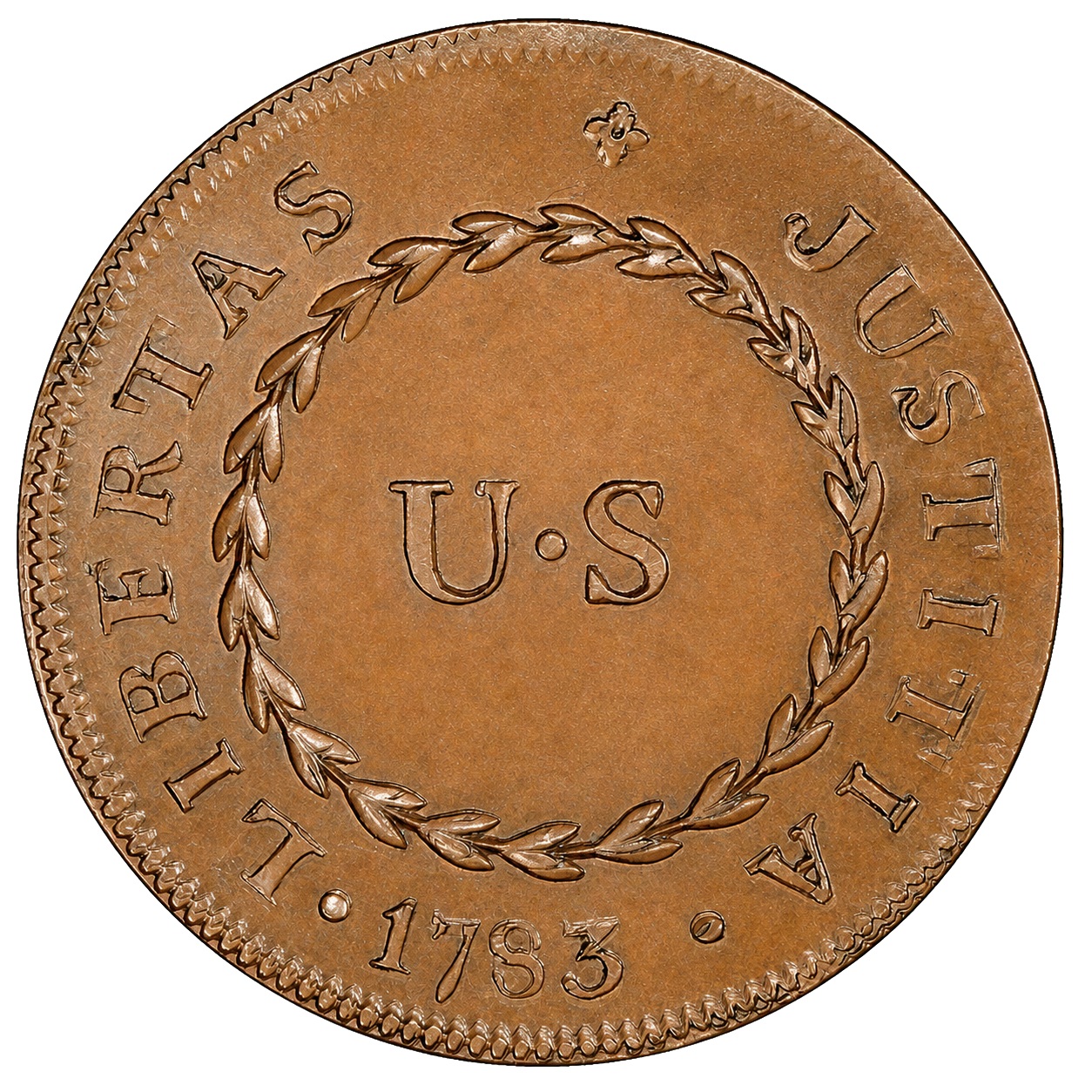
Obverse Reverse Nova Constellatio reference pair Representative same-object obverse and reverse. Mode A presentation polish removed only the source background; coin surfaces and diagnostics were not reconstructed.
Identity · History · Read the object · Catalog · Attribution · Collecting · Sources Identity and classification
Object class Contract coin, token, medal, or trade piece Authority Private issuers and regional networks Classification boundary Mixed early-republic objects · authority and purpose vary Catalog status Broad structured catalog Commerce still needed alternatives Independence did not immediately create enough uniform federal small money.
Merchants, contractors, and regional networks continued to issue or use substitutes with very different purposes.
Obverse, reverse, and the details that identify the type Confirm the major design, date, and mint mark before studying smaller die differences.
The main portrait and date Merchant names, devices, political subjects, or borrowed coin designs establish the issuer family.
Denomination, subject, and mint mark Value statements, trade legends, and regional symbols clarify intended use.
Attributed object catalog Rows preserve the current classification; blank production is unknown, not zero.
1779 AE Medal Rhode Island, "vlugtende" Below Ship 1779 AE Medal Rhode Island, Wreath Below Ship Betts-563 1779 Medal Rhode Island, Wreath Below Ship 1779 AE Medal Rhode Island, No Wreath 1779 Medal Rhode Island, No Wreath Below Ship 1783 MD 3P Chalmers 1783 MD 6P Chalmers, Small Date 1783 MD 6P Chalmers, Large Date 1783 MD 1S Chalmers, Long Worm 1783 MD 1S Chalmers, Short Worm 1783 MD 1S Chalmers, Rings 1783 C Nova 1/2P Pointed Rays, Large US 1783 C Nova 1/2P Pointed Rays, Small US 1783 C Nova 1/2P Blunt Rays 1785 C Nova 1/2P Blunt Rays 1785 C Nova 1/2P Pointed Rays 1785 C Nova 1/2P Pointed Rays, Small Date 1785 C Nova 1/2P Contemporary Imitation 1786 1/2P Constellatio Nova 1783 C Nova 1/2P Blunt Rays 1776 Copper New Hampshire 1776 Copper Massachusetts - Pine Tree 1776 Copper Massachusetts - Indian Copper 1776 1/2 P Massachusetts - Janus Head 1787 1/2C Massachusetts 1787 Cent Massachusetts, Arrows Transposed 1787 Cent Massachusetts 1787 Cent Massachusetts, Horn 1788 1/2C Massachusetts 1788 Cent Massachusetts, Period 1788 Cent Massachusetts '1747' 1/2P Machin's Mills '1771' 1/2P Machin's Mills '1772' 1/2P Machin's Mills '1772' 1/2P Machin's Mills, IVS '1772' 1/2P Machin's Mills, IUS '1774' 1/2P Machin's Mills '1774' 1/2P Machin's Mills, IVS '1774' 1/2P Machin's Mills, IUS ''1775'' 1/2P Machin's Mills ''1776'' 1/2P Machin's Mills '1776' 1/2P Machin's Mills, Small Date '1778' 1/2P Machin's Mills 1787 1/2P Machin's Mills 1788 1/2P Machin's Mills 1787 1/2P Nova Eborac, Seated Right 1787 1/2P Nova Eborac, Seated Left 1787 1/2P Nova Eborac, Small Head 1787 1/2P Nova Eborac, Large Head "1781" AE Token North American (1785) AE Token "USA" Bar Copper 1787 Tkn 1/2P Auctori Plebis 1736 Tkn 1/2P Auctori Plebis - Hispaniola '1789' Token Mott, Thick, Plain Edge '1789' Token Mott, Thick, Engrailed Edge '1789' Token Mott Company, Thin, Plain Edge '1789' Token Mott, Thin, Engrailed Edge '1789' Token Mott, Cent Weight '1789' Token Mott, White Metal 1790 AR 3P Standish Barry, Baltimore (1790) Church 1P Albany, New York. 'D' Above (1790) Church 1P Albany, New York, No 'D' 1790s Tkn 1/2P Kentucky, Plain Edge 1790s Tkn 1/2P Kentucky, Engrailed Edge 1790s Tkn 1/2P Kentucky, Bedworth Edge 1790s Tkn 1/2P Kentucky, Lancaster Edge 1790s Tkn 1/2P Kentucky, I Fielding Edge 1790s Tkn 1/2P Kentucky, W Parker Edge 1790s Tkn 1/2P Kentucky, Birmingham Edge 1790s Tkn 1/2P Kentucky, Vine Edge 1794 Tkn 1/2P Franklin Press 1794 Tkn 1/2P Franklin Press, ASYLUM edge 1794 Tkn 1/2P Franklin Press, Diagonally Reeded Edge 1794 Cent Talbot, Allum & Lee 1794 Cent Talbot, Allum & Lee, Silver 1794 Cent Talbot, Allum & Lee, New York 1794 Cent Talbot, Allum & Lee, New York, Plain Edge 1795 Cent Talbot, Allum & Lee, Lettered Edge 1795 Cent Talbot, Allum & Lee, Plain Edge 1795 Mule Talbot/Blofield Mule 1794 Mule Talbot/Stork Mule, London Edge 1794 Mule Talbot/Stork Mule, Liverpool Edge 1794 Mule Talbot/Howard, London Edge 1794 Mule Talbot/Howard Mule, London Edge 1794 Mule Talbot/Howe, London Edge 1794 Mule Talbot/Howe Mule, London Edge 1794 Tk 1/2D Talbot/Birmingham Mule, London Edge 1794 Mule Talbot/Howard Plain Edge 1795 Mule Talbot/York Cathedral 1794 Mule Talbot/Birmingham Mule, London Edge 1794 Cent Talbot, Allum & Lee, New York 1795 Cent Talbot, Allum & Lee 1796 Tkn 1/2P Myddelton 1796 AR Token Myddelton 1796 1/2D Copper Co. of Upper Canada, Bronze 1796 AR Medal Castorland, Original (1796) AR Medal Castorland, Original Die Restrike (1796) AR Medal Castorland Restrike, Original Obverse "1796" AR Medal Castorland Restrike "1796" AV Medal Castorland Restrike (1796) AE Medal Castorland, Original (1796) AE Medal Castorland, Copper Original (1796) AE Medal Castorland Restrike, Original Dies (1796) AE Medal Castorland Restrike, Original Obverse (1796) AE Medal Castorland Restrike, Reeded Edge (1796) AE Medal Castorland Restrike, Plain Edge (1796) AE Medal Castorland Restrike, Matte 1817 1/2 RL Texas Jola 1818 1/2 RL Texas Jola, Lg Plan 1818 1/2 RL Texas Jola, Small Planchet 1820 Token North West Company, Brass 1820 Token North West Company, Copper Attribution and authenticity Identify maker or issuer family first; then separate legal status, denomination, metal, edge, and original-versus-restrike status.
Issuer and production Production methods, issuing authority, and intended use vary across this catalog; do not infer a federal mint process from the page layout.
Authenticity Confirm weight, diameter, metal, edge, manufacture, and multiple repeatable diagnostics with a trusted specialist reference.
Grading Separate circulation wear from weak strike, planchet flaws, corrosion, cleaning, tooling, repairs, mounts, and other post-production changes.
Rarity A low catalog count or famous name does not by itself establish rarity; exact attribution, survival, condition, and demand all matter.
Provenance Retain labels, envelopes, invoices, auction references, prior attributions, and collection history; provenance is evidence, not decoration.
From one type coin to a complete catalog One representative coin : Choose one problem-free, readable example and learn the size, edge, and major design.Major-type set : Use one coin per major design to show changes in artwork, composition, or production.Dates and mints : Work through the issue catalog by date and mint, defining special finishes separately.Sources and image provenance Fugio Cent, 1787 — Smithsonian National Museum of American HistoryNational Numismatic Collection — Smithsonian National Museum of American HistoryPost-1776 Private and Regional Issues category reference — PCGS CoinFacts