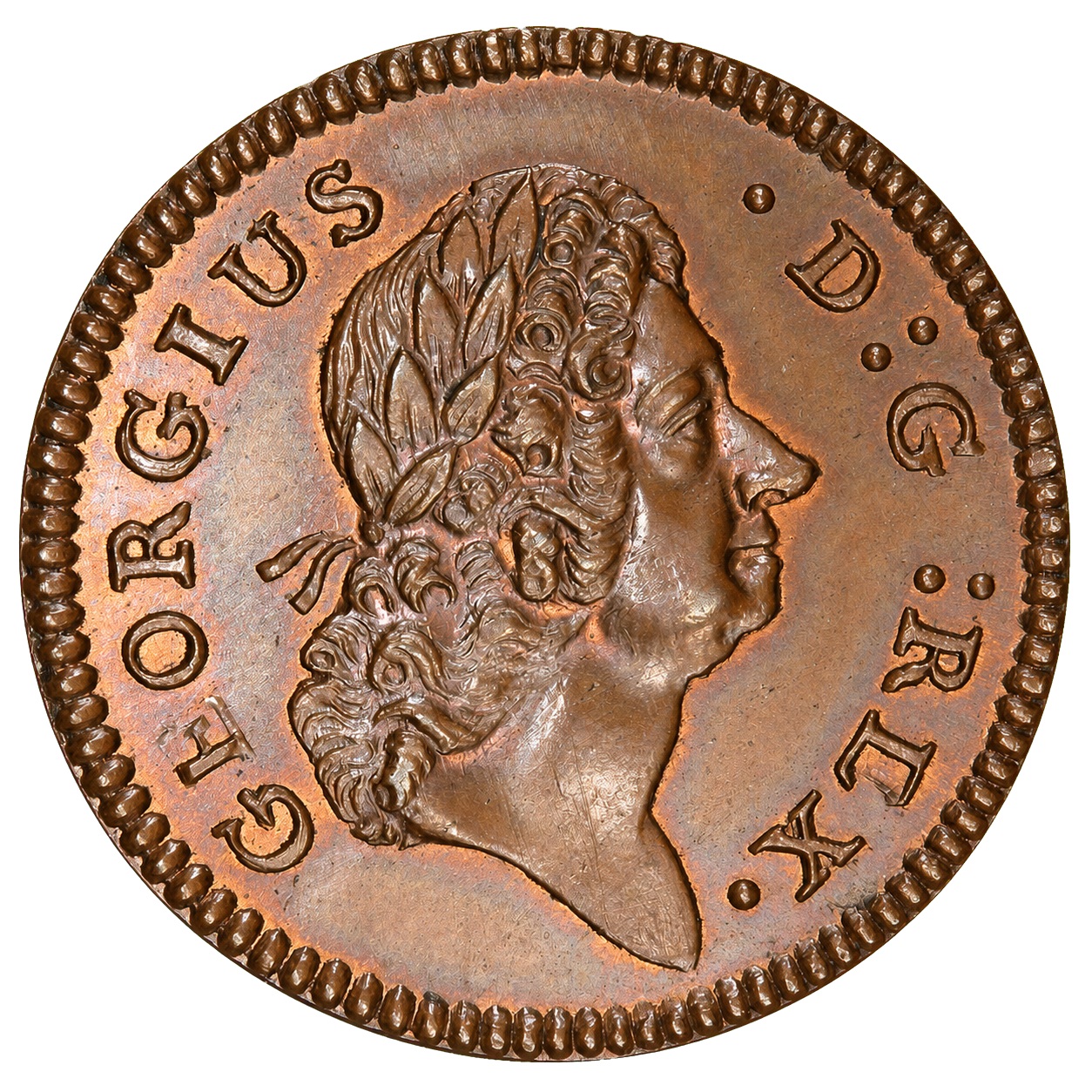
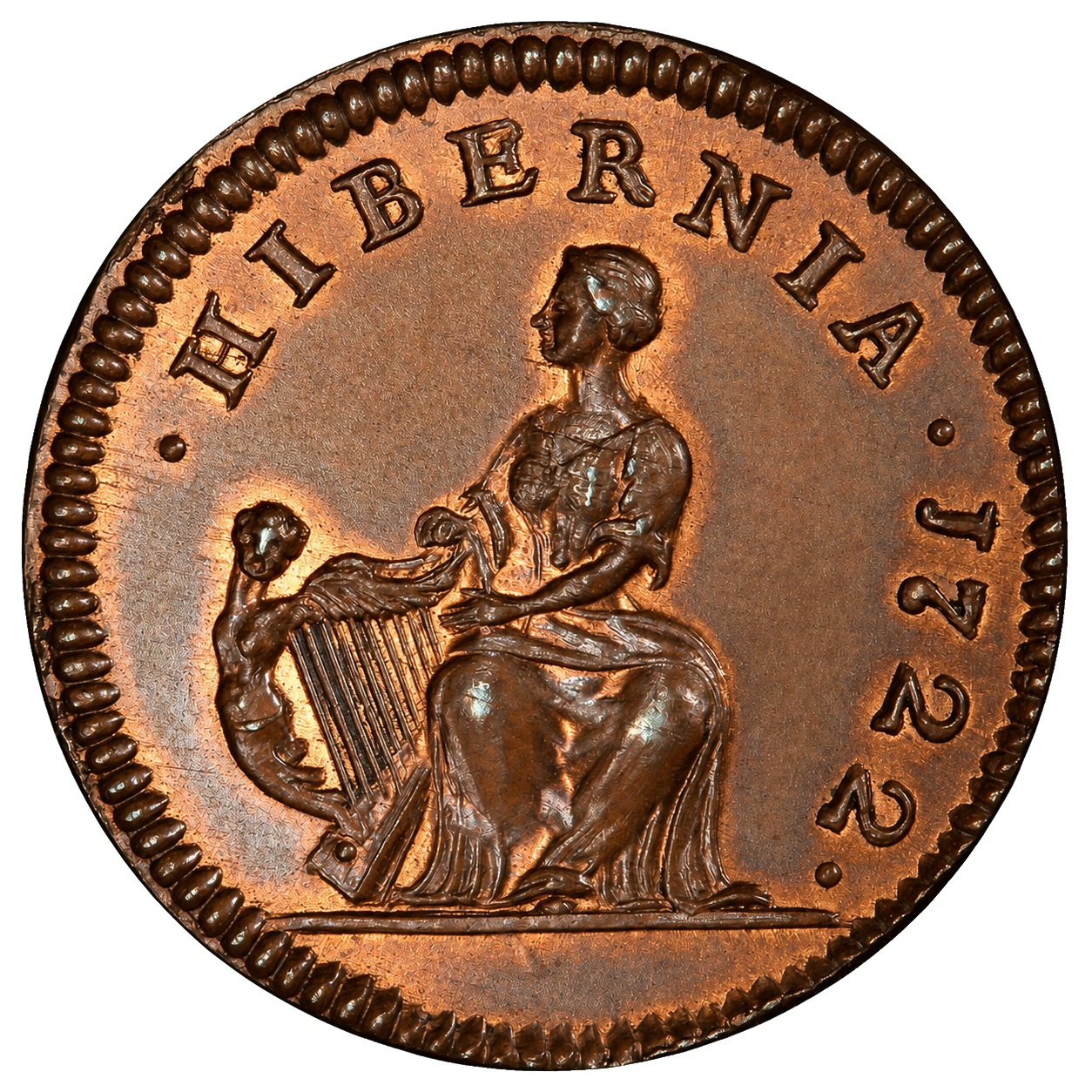
Private and regional issues before independence include early Bermuda coinage, Hibernia pieces, merchant tokens, and political issues that circulated or collected in North America.
The broad 1616–1766 catalog preserves ten normalized type groups; inclusion does not mean every piece was struck in the future United States.
Verified side pairMode A · presentation polish
Obverse
Reverse
Wood’s Hibernia reference pair
Representative same-object obverse and reverse. Mode A presentation polish removed only the source background; coin surfaces and diagnostics were not reconstructed.
Identity and classification
Object class
Coin, token, or regional substitute
Authority
Private, commercial, and regional issuers
Classification boundary
Mixed object classes · intended use must be stated
Catalog status
Broad structured catalog
Money arrived through many channels
Colonial commerce relied on imported coins, contracted pieces, local tokens, and political medals as well as official colonial issues.
Circulation evidence and later collector classification are not always the same claim.
Obverse, reverse, and the details that identify the type
Confirm the major design, date, and mint mark before studying smaller die differences.
The main portrait and date
Issuer names, royal portraits, local devices, or political figures are the first attribution clues.
Denomination, subject, and mint mark
Ships, harps, legends, denominational marks, and regional emblems distinguish otherwise similar copper and silver pieces.
Attributed object catalog
Rows preserve the current classification; blank production is unknown, not zero.