Regulated gold consists of foreign coins weighed, clipped, plugged, or countermarked by recognized goldsmiths so they could pass at a stated local value.
The 1725–1825 catalog groups host coins and regulator marks; the host's date and country remain distinct from the regulating event.
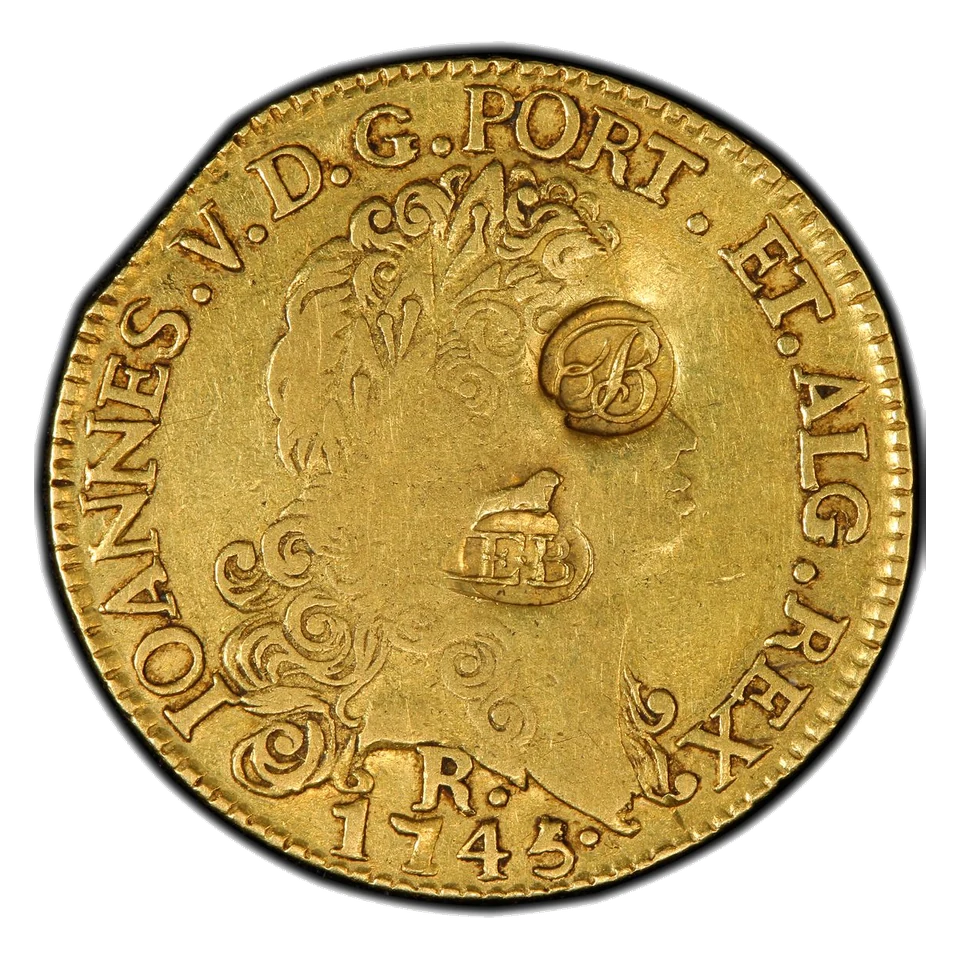
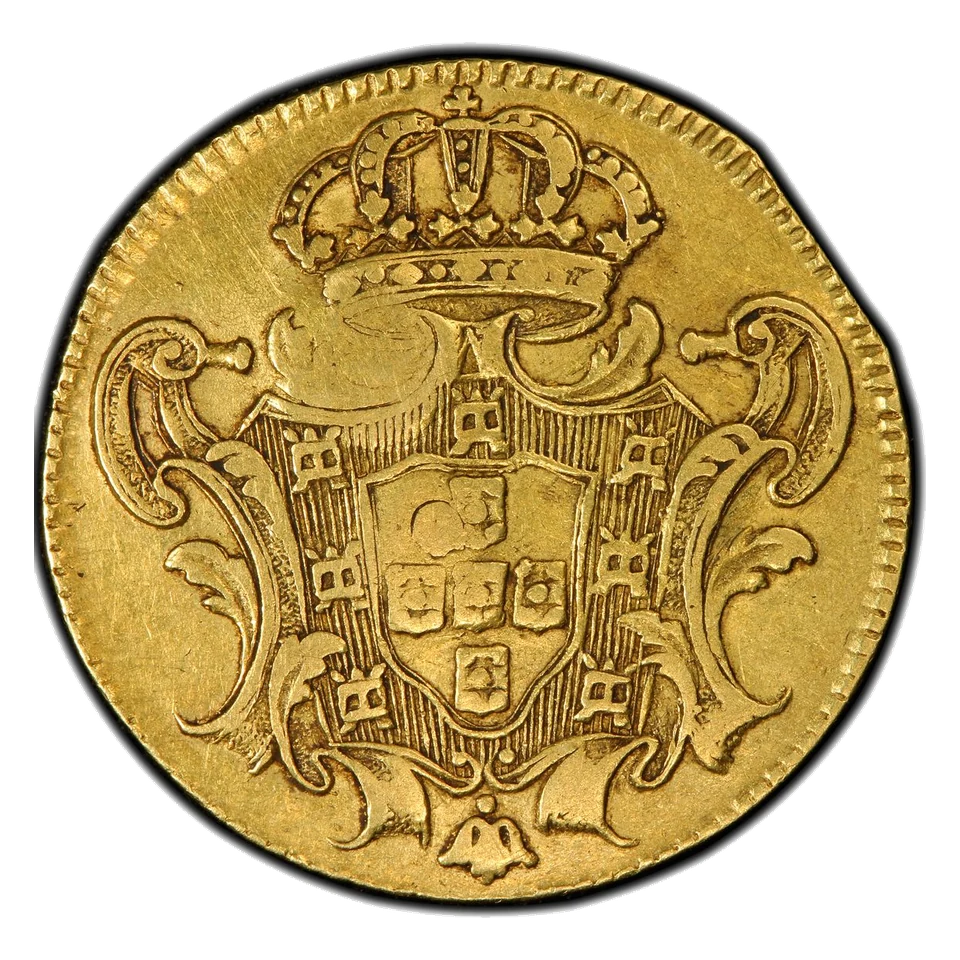
Representative same-object obverse and reverse. Mode A presentation polish removed only the source background; coin surfaces and diagnostics were not reconstructed.
Open source record · PCGS CoinFactsIdentity and classification
- Object class
- Regulated foreign host coin
- Authority
- Foreign mint plus North American regulator
- Classification boundary
- Host coin and regulating event are separate identities
- Catalog status
- Structured host-and-regulator catalog
Trust added with a punch and a scale
Before a uniform federal gold supply, merchants needed ways to verify worn or altered foreign gold.
A regulator's mark could attest to adjusted weight, but each host coin preserves its own prior history.
Obverse, reverse, and the details that identify the type
Confirm the major design, date, and mint mark before studying smaller die differences.
The main portrait and date
Read the underlying Portuguese, Spanish, British, or other host design first, then locate plugs and countermarks.
Denomination, subject, and mint mark
Additional regulator punches may appear on either face and can overlap the host legend or portrait.
Attributed object catalog
Rows preserve the current classification; blank production is unknown, not zero.
Attribution and authenticity
Record host country, denomination, date, weight adjustment, plug or clip, regulator, punch position, and provenance separately.
Issuer and production
A recognized goldsmith could weigh and adjust a foreign coin, then apply a punch intended to support a stated local valuation.
Authenticity
A loose punch is not proof. Host identity, weight, metal, plug or clipping evidence, punch linkage, and provenance must agree.
Grading
Describe host wear, adjustment, countermark strength, plugs, clipping, edge damage, and later tooling as separate conditions.
Rarity
Rarity belongs to the exact host-and-regulator combination, not merely to the regulator's name.
Provenance
Because altered hosts and false punches are common, a documented chain of ownership can be central evidence.
From one type coin to a complete catalog
- One representative coin: Choose one problem-free, readable example and learn the size, edge, and major design.
- Major-type set: Use one coin per major design to show changes in artwork, composition, or production.
- Dates and mints: Work through the issue catalog by date and mint, defining special finishes separately.
Sources and image provenance
- Gold Colonial Coins: Regulated Gold — Coin World
- National Numismatic Collection — Smithsonian National Museum of American History
- Regulated Gold category reference — PCGS CoinFacts
- 1745-R Brazil 6,400 reis with Ephraim Brasher countermark — PCGS CoinFacts