Washington pieces include portrait tokens, political and memorial medals, British-made trade pieces, patterns, and later collector productions.
Twenty-one type groups and 86 rows span the catalog's 1783–1800 headline range, with classification driven by subject rather than one issuer.
Verified side pair Mode A · presentation polish
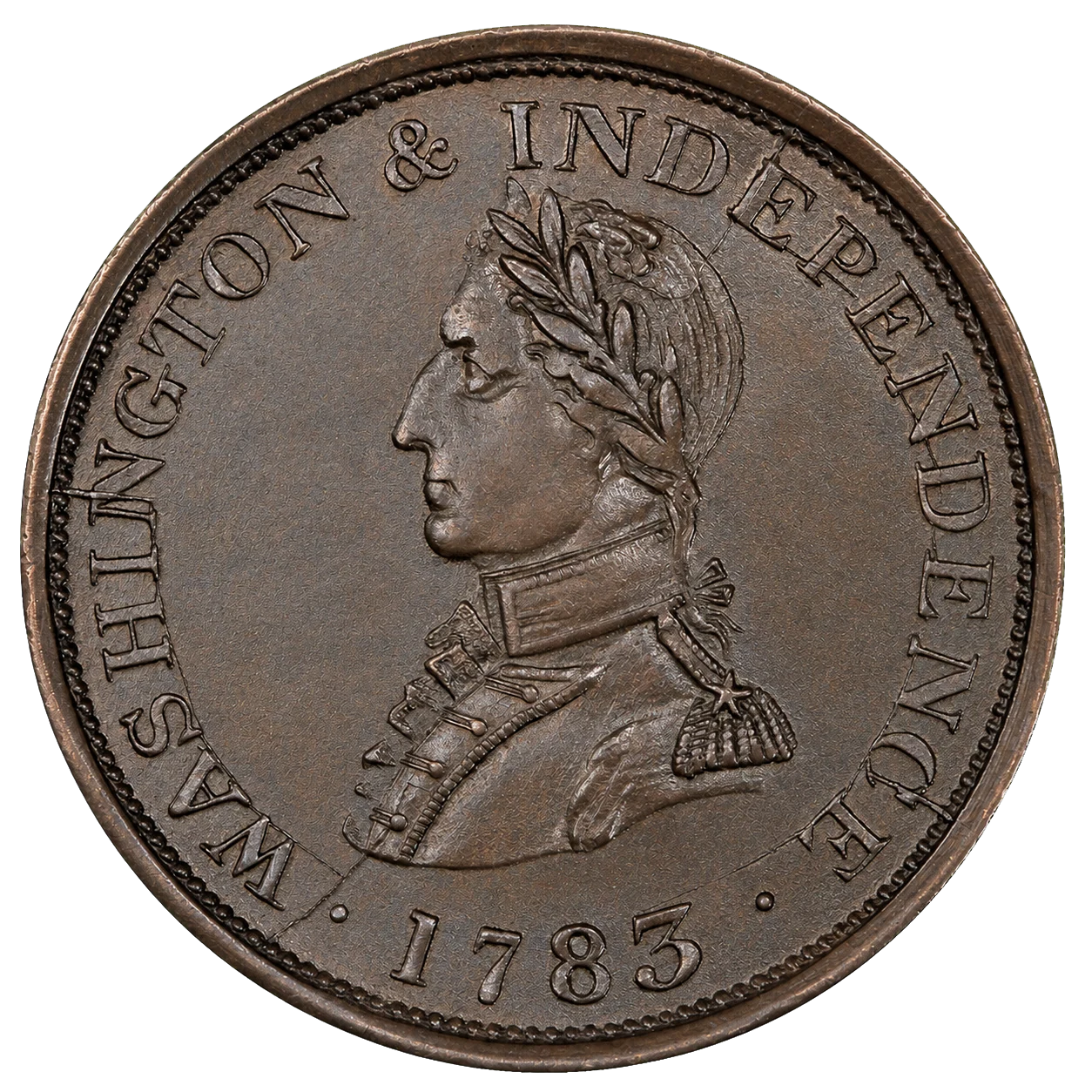
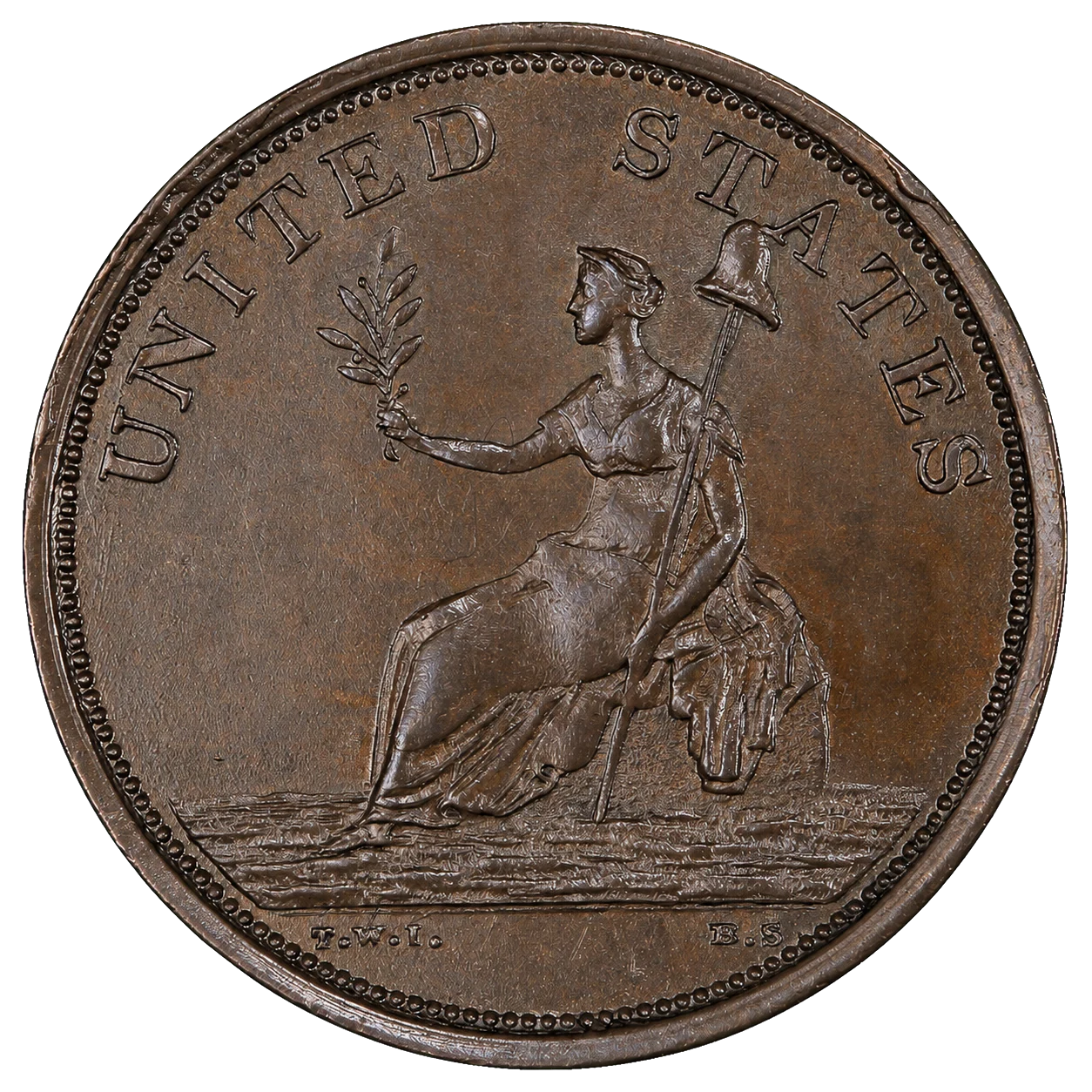
Obverse Reverse 1783 Washington and Independence, Military Bust reference pair Representative same-object obverse and reverse. Mode A presentation polish removed only the source background; coin surfaces and diagnostics were not reconstructed.
Identity · History · Read the object · Catalog · Attribution · Collecting · Sources Identity and classification
Object class Token, medal, pattern, or later production Authority Multiple private and medallic issuers Classification boundary Subject-based catalog · Washington portrait does not establish issuer Catalog status Large structured browser: 21 types and 86 rows A national image before a federal portrait coin George Washington appeared on private tokens and medals long before a circulating U.S. coin used a presidential portrait.
Many pieces were made abroad or for collectors, so portrait subject does not identify mint location.
Obverse, reverse, and the details that identify the type Confirm the major design, date, and mint mark before studying smaller die differences.
The main portrait and date Washington portraits range from realistic busts to stylized or borrowed heads; legends and initials are critical.
Denomination, subject, and mint mark Eagles, shields, ships, allegories, and memorial text distinguish major token and medal families.
Attributed object catalog Rows preserve the current classification; blank production is unknown, not zero.
1783 Tkn 1/2P Georgivs Triumpho 1783 Copper Washington & Independence, Large Military 1783 Copper Washington & Independence, Small Bust, PE 1783 Copper Washington & Independence, Small Bust, EE 1783 Copper Washington Draped, No Button 1783 Copper Washington Draped, Button 1783 Cent Washington& Independence, Brass (1783) Copper Washington & Independence, Plain Edge (1783) Copper Washington & Independence, Engrailed Edge (1783) Silver Washington & Independence, Silver Restrike 1783 1C Washington, Unity States (ca. 1820) Tkn 1C Washington Double-Head, Plain Edge (c. 1820) Tkn 1C Washington Double-Head, Engrailed Edge 1784 Copper Wash, Ugly Head 1784 Pewter Wash, Ugly Head 1791 Tkn 1/2P Liverpool, Angelsey Edge 1791 Tkn 1/2P Liverpool, Pewter 1791 1C Washington President, Large Eagle 1791 1C Washington President, Small Eagle 1791 1C Washington, Small Eagle, Brass 1792 AE 1C Washington President, Eagle Reverse 1792 AE 1C Washington President, Plain Edge 1792 AR 50C Washington President, Eagle Reverse 1792 '50C' Washington President, Plain Edge 1792 '$10' Washington President 1792 AE Token Wash Pres, General Reverse, Plain Edge 1792 AE Token Wash Pres, General Reverse, Lettered Edge Washington Cent Born Virginia, Eagle Reverse (c.1960) Medal Breen-1245 Restrike 1792 Cent Wash, Roman Head 1792 1C Washington Getz Pattern 1792 AR 50C Washington Getz Pattern, Small Eagle 1792 AR 50C Washington Getz Pattern 1792 AR 50C Washington Getz 1792 50C Small Eagle Silver Leaved Edge "1792" (1860) 50C Washington Getz Pattern "1792" 50C Washington Getz Pattern 1793/2 Ship 1/2P Washington President, Lettered Edge 1793/2 Ship 1/2P Washington President, Plain Edge 1793/2 Ship 1/2P Washington President, Brass 1795 1/2P Wash Grate, Large Buttons, Lettered Edge 1795 1/2P Wash Grate, Large Buttons, Lettered Edge 1795 1/2P Wash Grate, Small Buttons, Reeded Edge 1795 1/2P Wash Grate, Brass 1795 1/2D Liberty and Security Plain Edge, GW-48 1795 1/2D Liberty and Security Payable London, GW-48 1795 1/2D Liberty and Security Birmingham, GW-48 1795 1/2D Liberty and Security, Asylum Edge, GW-48 1795 1D Liberty and Security (1795) Penny Liberty and Security (1795) Penny Liberty & Security, Corded Rim (1795) Penny L&S Corded Rim (1795) 1/2 P North Wales, Plain Edge (1795) 1/2 P North Wales, Lettered Edge (1795) 1/2 P North Wales, 2 Stars (1800) AE Medal Washington Repub Ameri 1796 AE Medal Washington Repub Ameri (1790s) AE Medal Washington Success, Large, Plain Edge Wash-Success AE Medal Large, Plain Edge, Silvered (1790s) AE Medal Washington Success, Large, Reeded Edge (1790s) AE Medal Washington-Success, Silvered Large, Reeded Edge Wash-Success AE Medal Large, Reeded Edge, Silvered (1790s) Medal Washington-Success, Small, Plain Edge Wash-Success Medal Small, Plain Edge, Silvered (1790s) Medal Washington-Success, Small, Reeded Edge (1790s) Medal Washington-Success Silvered Small, Reeded Edge (1790s) Medal Small, Reeded Edge, Silvered Wash-Success Medal Small, White Metal (1790s) Medal Washington Success, Small, Hand-Scalloped Edge (1790s) Medal Washington Success, Small, Hand-Scalloped Edge (ca. 1862) AE Medal GW-445/444 Mule Bronze (c.1800) AE Medal GW-83, Westwood, 2nd Rev. (c.1841) Medal GW-163 Copper Reeded Edge, Tyrant Alcohol, 2nd Dies (c.1841) Medal GW-164 Silver - Tyrant Alcohol-Holed (c.1850-60) Token Baker-76B Bronze (c.1858) AR Medal GW-11 Silver, 2nd Obv 1788 Medal Baker-1829 1860 AE Medal Baker-326A, Mint Cabinet 1876 Medal Baker-427A 1939 Medal Baker-734 Brass No Date Medal Baker-332 (c.1824) Medal GW-114 Silver (1776) Medal Baker-49J Bronze (1864-89) AE Medal GW-09-US1, Washington Before Boston 1978 Medal Washington Before Boston, Silver Restrike (1800) AE Medal Washington Funeral (1800) Medal Washington Funeral Penny Tin Attribution and authenticity Confirm catalog family, portrait, reverse, legend, edge, metal, and die diagnostics; place of manufacture varies.
Issuer and production British-made trade pieces, American medals, patterns, memorial objects, and later collector productions share the Washington subject.
Authenticity Portrait resemblance is not an attribution. Verify edge, weight, metal, die markers, manufacture, and known replica diagnostics.
Grading Tokens and medals may show weak strike, edge flaws, planchet defects, corrosion, or mount removal; describe each separately from wear.
Rarity Availability varies by catalog family, metal, edge, die pairing, and original-versus-later status—not by portrait alone.
Provenance Documented old holdings and auction chains are especially useful for rare metals, patterns, and memorial pieces.
From one type coin to a complete catalog One representative coin : Choose one problem-free, readable example and learn the size, edge, and major design.Major-type set : Use one coin per major design to show changes in artwork, composition, or production.Dates and mints : Work through the issue catalog by date and mint, defining special finishes separately.Sources and image provenance Washington Piece, 1783 — Smithsonian National Museum of American HistoryNational Numismatic Collection — Smithsonian National Museum of American HistoryWashington Pieces category reference — PCGS CoinFacts