Fuhonsen: Archaeology Before Wado Kaichin
Excavation at Asukaike established that Fuhonsen was manufactured in the later seventh century in a major metalworking complex associated with the court. Molds, crucibles, sprues, unfinished pieces, and files provide direct production evidence. Whether every Fuhonsen functioned as broadly circulating ordinary money remains debated.
富本銭Fuhonsen
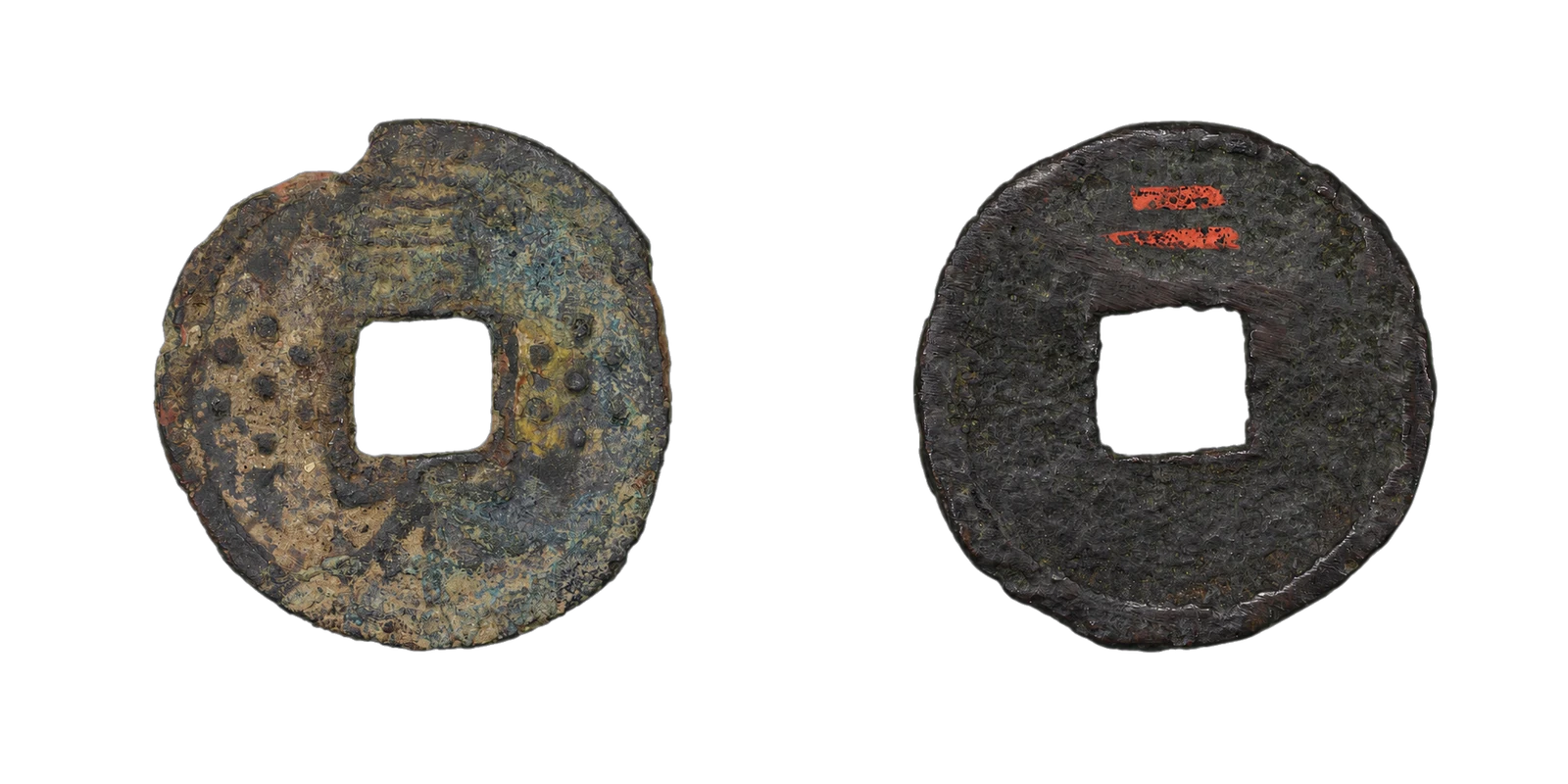
- Date
- Later 7th century
- Site
- Asukaike site
- Metal
- copper-antimony alloy, with specimen variation
- Function
- Probable coin; scope debated
Evidence layers
Established, accepted, debated, and speculative
Directly established
Later-seventh-century production at Asukaike, a cast round-square-hole form, the 富本 inscription, and a court-linked metalworking context are directly supported.
Widely accepted
It is widely treated as an early domestically produced coin and is often connected with the copper coin referenced in the 683 Nihon Shoki edict.
Still debated
Its precise issuing framework, circulation geography, ordinary monetary use, and an unqualified claim to be 'Japan's first coin' remain matters for careful wording.
Do not infer
A mint, denomination, fixed weight standard, or ritual-only function must not be assigned to an unidentified specimen without stronger evidence.
Object-specific record
- Archaeological status
- manufacture archaeologically established
- Context
- later seventh-century court-linked production complex
- Interpretation confidence
- high for local manufacture; medium for ordinary circulation
- Hole
- central square hole
- Weight evidence
- —
- Production evidence
- excavated production molds · excavated sprues and casting debris
Relationship to Fuhonsen
Fuhonsen follows early silver evidence but cannot be treated as a simple replacement without stronger circulation evidence.
Relationship to Wadō Kaichin
The 708 issue has firmer documentary issuance evidence. Earlier objects change the language of 'first coin' but do not erase Wado Kaichin's administrative importance.
Evidence
Sources and scope
These links support the claims on this page. Source authority does not imply permission to republish source images.
Fuhonsen and Mumon Ginsen context, the 708 issue of Wado Kaichin, state monetary policy, quality decline, the 958 final issue, and the return to commodity money.
Open sourceEarly silver, Fuhonsen alloy and chronology, Wado Kaichin, ancient state coinage, and restrained public-facing classifications.
Open sourceHistoriography and competing interpretations concerning Mumon Ginsen, Fuhonsen, Wado Kaichin, and the designation of Japan's first coin.
Open sourceAsukaike production complex, Fuhonsen, molds, casting debris, crucibles, files, and court-workshop archaeological context.
Open sourceFuhonsen molds, sprues, unfinished pieces, state workshop context, and evidence concerning production technique.
Open source