Later 7th century–958
Ancient Japanese Coins
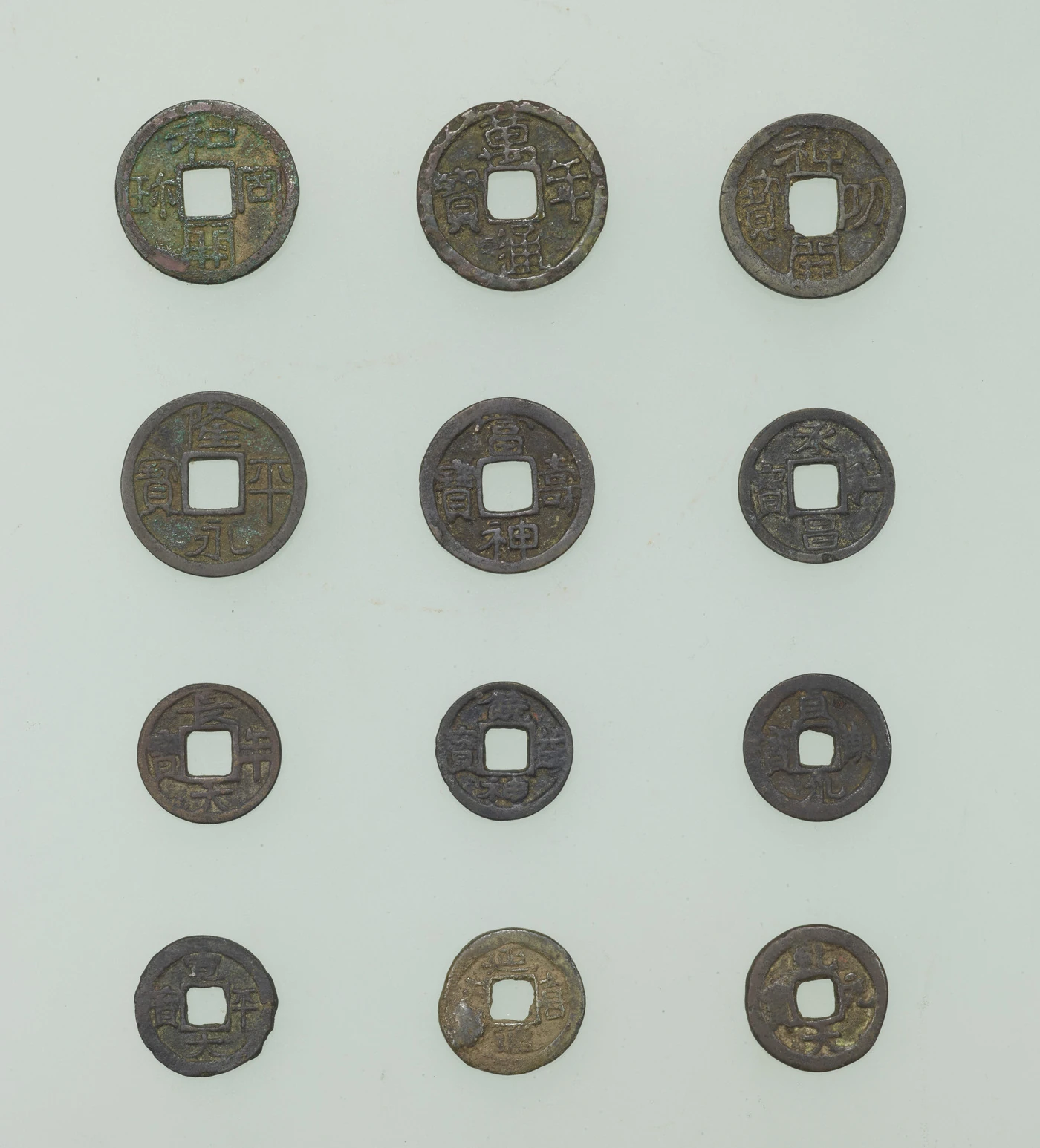
Ancient Japanese coinage developed as court institutions, imported ideas, metal supply, administration, and public acceptance changed together. Archaeology reveals money-like silver and Fuhonsen before the documented 708 Wado Kaichin issue; eleven later official copper types trace repeated attempts to sustain state coin use.
古代日本貨幣
- Span
- Later 7th century–958
- Official sequence
- 12 coin types
- Final issue
- Kengen Taihō · 958
- Publication
- Review required
Chronology
From early silver to the final court issue
Commodity value and weighed silver
Rice, textiles, imported ideas, and silver objects belong to different evidence classes.
Fuhonsen / 富本銭
Asukaike archaeology establishes production but not uniform everyday circulation.
Wadō Kaichin / 和同開珎
The court issued a Tang-modeled coin and promoted administrative use.
Successive court issues
New coins attempted to sustain official value amid supply and acceptance problems.
Smaller, poorer late issues
Measured specimens show smaller fabric and changing lead-rich alloy trends.
Commodity money, then imported cash
No new court coin type followed Kengen Taiho for centuries.
Visual comparison
Four objects, four evidence boundaries
Approved exact-source images are shown where available; every unavailable face remains explicitly labeled rather than substituted.
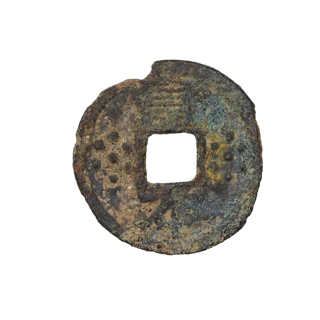
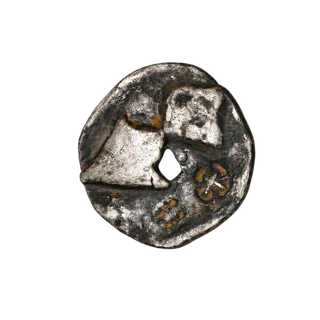
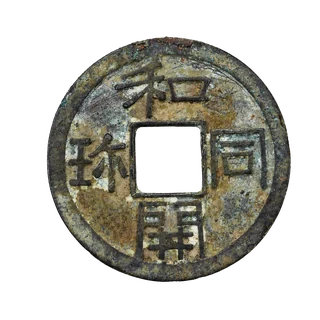
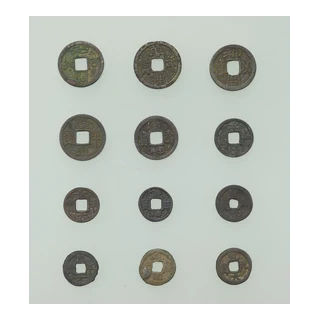
Square-hole cash form
A round cast body and central square hole connect the issues to a wider East Asian production and monetary tradition.
Casting
Molds, sprues, separation, and filing create evidence different from struck coinage.
Inscription reading
Orientation, historical forms, and later catalog habits must be separated.
Court authority
Issuance expressed state authority, but law and public acceptance did not always align.
Debasement
Use the term for documented metal and size trends, never as a substitute for specimen analysis.
Coin trust
Supply, quality, official ratios, private casting, and administrative use interacted.
Evidence
Sources and scope
These links support the claims on this page. Source authority does not imply permission to republish source images.
Fuhonsen and Mumon Ginsen context, the 708 issue of Wado Kaichin, state monetary policy, quality decline, the 958 final issue, and the return to commodity money.
Open sourceEarly silver, Fuhonsen alloy and chronology, Wado Kaichin, ancient state coinage, and restrained public-facing classifications.
Open sourceAsukaike production complex, Fuhonsen, molds, casting debris, crucibles, files, and court-workshop archaeological context.
Open source