Mumon Ginsen: Uninscribed Silver Before 708
Mumon Ginsen does not fit the same model as an inscribed copper cash coin. Its round silver form, small perforation, and weight-adjustment patches support a monetary interpretation, while variation and archaeological context prevent a simple claim that every example was a standardized circulating denomination.
無文銀銭Mumon Ginsen
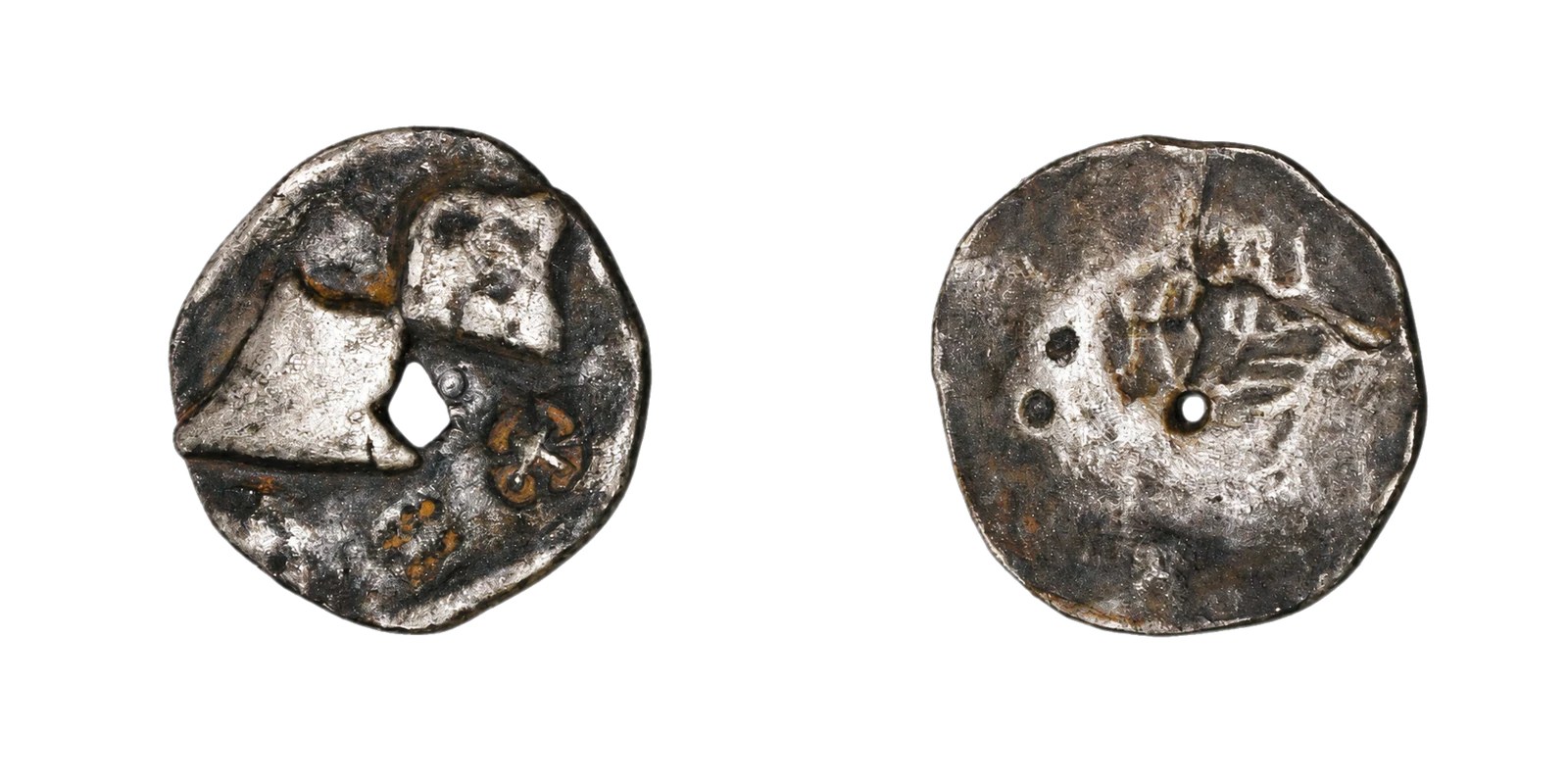
- Metal
- silver
- Form
- Perforated silver plate
- Diameter
- about 30 mm
- Inscription
- None
Evidence layers
Established, accepted, debated, and speculative
Directly established
The objects are silver, uninscribed, perforated, and archaeologically documented at multiple sites.
Widely accepted
Many researchers interpret weight adjustment as evidence for monetary silver and connect the group with the silver coin in the 683 edict.
Still debated
The exact production dates, normal circulation, denomination, ritual uses, and relationship to Fuhonsen are not conclusively settled.
Do not infer
Do not assign a square-hole cash-coin denomination, four-character inscription, mint, or universal weight to the group.
Object-specific record
- Archaeological status
- excavated at more than fifteen Kinai-centered sites
- Context
- find contexts span the seventh through ninth centuries; object production/use is generally placed from the mid-seventh to early eighth century
- Interpretation confidence
- medium
- Hole
- small central perforation, not the standard large square cash-coin hole
- Weight evidence
- {"targetObservationG":10.55,"basis":"possible one-bu target discussed in museum research; actual specimens vary"}
- Production evidence
- —
Relationship to Fuhonsen
Both belong to the pre-708 evidence horizon, but silver weight adjustment and cast copper production are different object systems.
Relationship to Wadō Kaichin
The 708 issue has firmer documentary issuance evidence. Earlier objects change the language of 'first coin' but do not erase Wado Kaichin's administrative importance.
Evidence
Sources and scope
These links support the claims on this page. Source authority does not imply permission to republish source images.
Fuhonsen and Mumon Ginsen context, the 708 issue of Wado Kaichin, state monetary policy, quality decline, the 958 final issue, and the return to commodity money.
Open sourceMumon Ginsen, Fuhonsen, Wado Kaichin, Mannen Tsuho, Jingu Kaiho, documentary issue dates, circulation policy, and reading evidence.
Open sourceEarly silver, Fuhonsen alloy and chronology, Wado Kaichin, ancient state coinage, and restrained public-facing classifications.
Open sourceHistoriography and competing interpretations concerning Mumon Ginsen, Fuhonsen, Wado Kaichin, and the designation of Japan's first coin.
Open sourceWeight-adjusted Mumon Ginsen interpretation and detailed archaeological production evidence for Fuhonsen.
Open source