835
Jōwa Shōhō: Imperial Coin No. 6
Issued in Jōwa 2 and identified by the Currency Museum as the first Japanese coin whose inscription used the era name.
承和昌寶Jōwa Shōhō
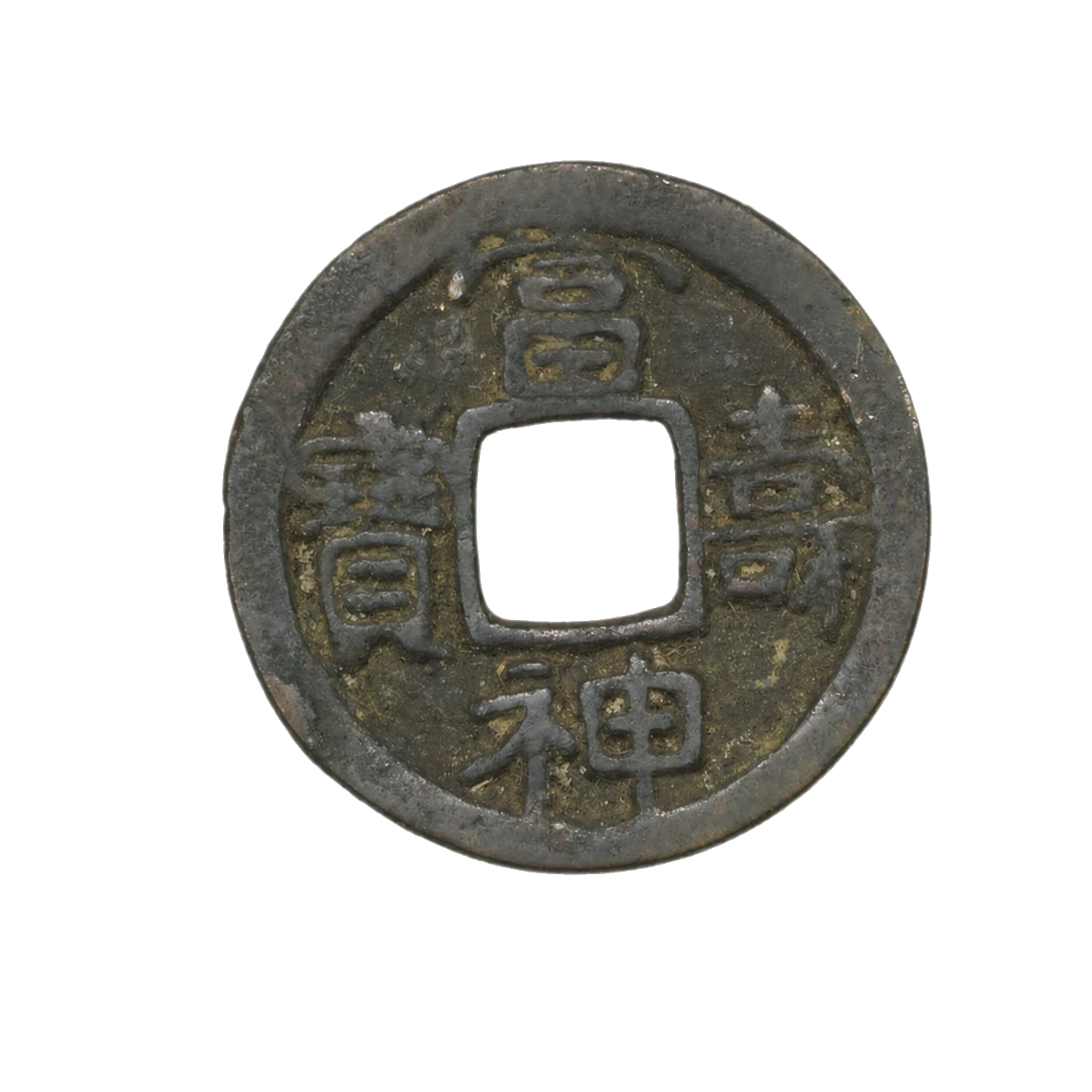 裏Other face not present in the approved source
- Sequence
- 6 / 12
- Issue year
- 835
- Era
- 承和 2
- Authority
- Imperial court under Emperor Ninmyō
Historical context
Issued in Jōwa 2 and identified by the Currency Museum as the first Japanese coin whose inscription used the era name.
Inscription and reading
承和昌寶 · Jōwa Shōhō · Jowa Shoho
Reading confidence · high
Observed catalog specimens
Measurements, metal, and cast fabric
These values are comparative observations, not official tolerances or authentication cutoffs.
- Weight
- 2.01–3.33 g
- Diameter
- 20.47–23.36 mm
- Metal
- copper alloy
- Hole
- central square hole
- Rims
- cast inner and outer rims, often lighter than earlier issues
- Casting
- cast copper-alloy cash coin
Composition evidence
Later sampled issues generally have low tin and variable lead-rich copper alloy.
Low-tin Cu-Pb tendency in sampled coins.
Attribution boundary
A named court and era establish issue context. They do not establish the physical mint of an unidentified specimen.
high for identity, issue date, authority, and era-name significance
Condition and authenticity
weak strike-like appearance is usually cast weakness; record corrosion separately
Open cast-coin guide →Evidence
Sources and scope
These links support the claims on this page. Source authority does not imply permission to republish source images.
Issue dates, emperors, policy evidence, production decline, and historical notes for Ryuhei Eiho through Kengen Taiho.
Open sourceSpecimen-level outer diameter and weight observations for issues two through twelve; observations are not statutory standards.
Open sourceMeasured copper, tin, lead, iron, arsenic, and antimony patterns across sampled ancient coins, with specimen-level limitations.
Open source