Taishō · 1912–1926
Taishō Coinage
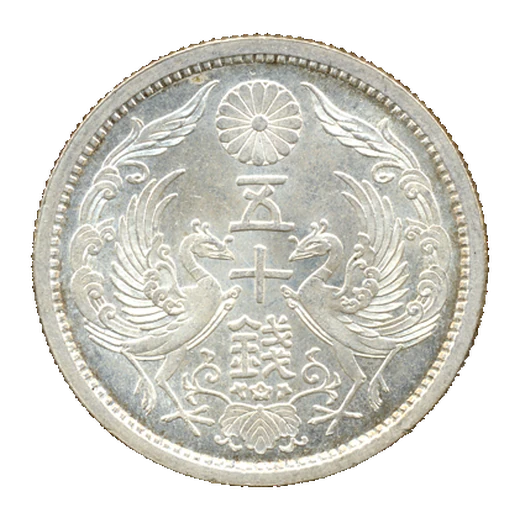
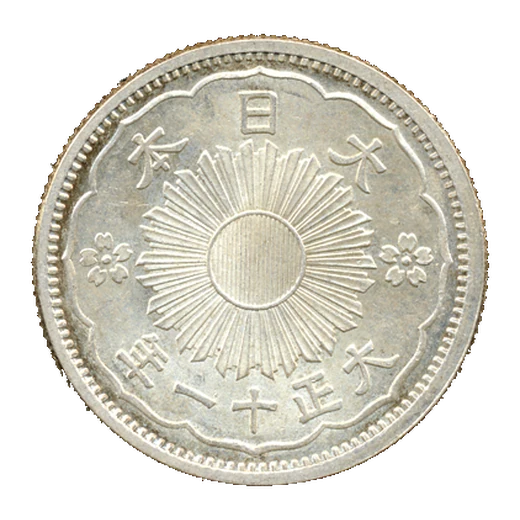
Taishō coinage combined late-Meiji continuities with lighter bronze, holed cupronickel, and a reduced silver 50 sen, while documented Yatagarasu pieces never entered circulation.
大正時代の貨幣
- Core routes
- 20
- Issue studies
- 14
- Exact image pairs
- 15
- Indexable routes
- 0
Context
Historical and monetary setting
The reign boundary did not reset the currency system. Existing gold and subsidiary-silver standards continued where dated issues existed. New small-change designs reduced mass, introduced central holes, and in 1922 replaced the earlier large 50-sen silver format with a smaller Phoenix type.
Identification
How to classify the object
Do not split a type merely because its dates cross Meiji, Taishō, or Shōwa. Record the type once and attach era-specific issues.
Evidence boundary
What this page does not claim
Taishō-dated Silver Yen production for Taiwan is contextual, not ordinary domestic Taishō circulation.
| Series | Denomination | Years | Material | Mass g | Diameter mm | Form |
|---|---|---|---|---|---|---|
| 5 Rin Bronze | 5 Rin | 1916–1919 | copper | 2.1 | 18.78 | solid |
| 1 Sen Bronze | 1 Sen | 1916–1938 | copper | 3.75 | 23.03 | solid |
| Large Holed 5 Sen Cupronickel | 5 Sen | 1917–1920 | copper | 4.27 | 20.6 | holed |
| Small Holed 5 Sen Cupronickel | 5 Sen | 1920–1932 | copper | 2.62 | 19.09 | holed |
| Holed 10 Sen Cupronickel | 10 Sen | 1920–1932 | copper | 3.75 | 22.12 | holed |
| Phoenix 50 Sen Silver | 50 Sen | 1922–1938 | silver | 4.95 | 23.5 | solid |
Continue
Related Taisho–Showa references
Evidence
Sources and scope
These links support the claims on this page. Source authority does not imply permission to republish source images.
Official specifications, first-issue years, legal-expiry dates, wartime and postwar regular types.
Open sourceTaishō holed 5- and 10-sen designs, material saving, anti-counterfeiting, and the unissued Yatagarasu 10 sen.
Open source1914 Silver Yen production context, 1948 brass 1 yen, its 1950 production stop, and the 1955 aluminum successor.
Open source