Temporary Currency Act · 1938–1945
Wartime Japanese Coinage
Follow sourced changes from silver and nickel to aluminum-bronze, brass, aluminum, tin, and tin-zinc, with mass reductions stored as separate specification generations.
日本の戦時貨幣
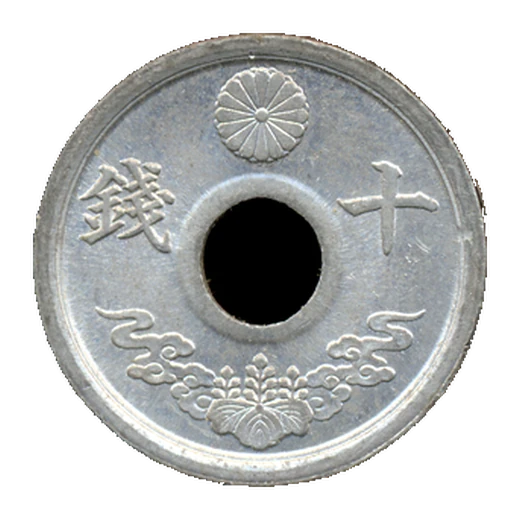
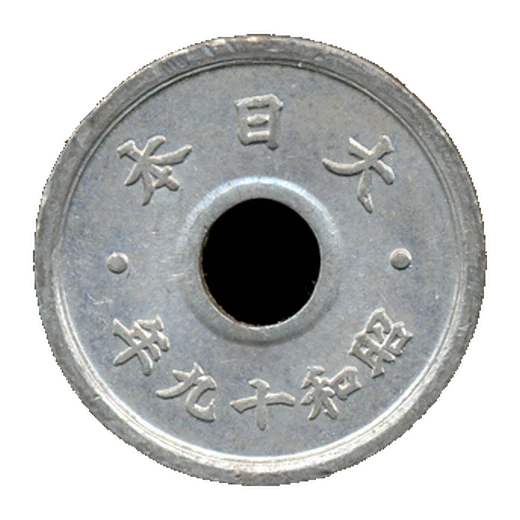
- Core routes
- 20
- Issue studies
- 14
- Exact image pairs
- 15
- Indexable routes
- 0
Context
Historical and monetary setting
Japan Mint history links the emergency system to rising currency demand and diversion of strategic materials. The official table documents repeated reductions within the same aluminum designs before 1944 tin and tin-zinc issues.
Identification
How to classify the object
A wartime date alone does not identify composition. Verify diameter, mass, hole, design, and the official specification generation.
Evidence boundary
What this page does not claim
No domestic issued iron coin is asserted. Ceramic preparations are unissued and appear only in the evidence-gated section.
Material evolution
A sequence, not one alloy for every denomination
- Late Meiji–TaishoGold / silver
- 1916–1932Bronze / cupronickel
- 1933–1937Nickel
- 1938–1940Aluminum-bronze / brass
- 1938–1946Aluminum
- 1944–1946Tin / tin-zinc
- 1946–1957Postwar brass / nickel / silver
Iron remains a search and evidence-correction topic: no issued domestic national iron type is verified in the controlling official tables.
| Series | Years | Primary metal | Official alloy | Status | Sourced context |
|---|---|---|---|---|---|
| jp-p6-series-1-sen-bronze | 1916–1938 | copper | {"copper":95,"tin":4,"zinc":1} | pre-emergency baseline | — |
| jp-p6-series-50-sen-phoenix-silver | 1922–1938 | silver | {"silver":72,"copper":28} | pre-emergency precious-metal issue | withdrawn before the substitute-metal sequence |
| jp-p6-series-1-sen-brass | 1938–1940 | copper | {"copper":90,"zinc":10} | wartime-circulation | Temporary Currency Act material transition |
| jp-p6-series-5-sen-aluminum-bronze | 1938–1940 | copper | {"copper":95,"aluminum":5} | wartime-circulation | Temporary Currency Act replacement generation |
| jp-p6-series-10-sen-aluminum-bronze | 1938–1940 | copper | {"copper":95,"aluminum":5} | wartime-circulation | Temporary Currency Act replacement generation |
| jp-p6-series-1-sen-aluminum | 1938–1943 | aluminum | {"aluminum":100} | wartime-circulation | multiple official mass reductions |
| jp-p6-series-5-sen-aluminum | 1940–1943 | aluminum | {"aluminum":100} | wartime-circulation | multiple official mass reductions |
| jp-p6-series-10-sen-aluminum | 1940–1943 | aluminum | {"aluminum":100} | wartime-circulation | multiple official mass reductions |
| jp-p6-series-1-sen-tin-zinc | 1944–1945 | tin | {"tin":50,"zinc":50} | emergency-circulation | late-war substitute alloy |
| jp-p6-series-5-sen-tin | 1944–1946 | tin | {"tin":93,"zinc":7} | emergency-circulation and postwar bridge | late-war substitute alloy |
| jp-p6-series-10-sen-tin | 1944–1946 | tin | {"tin":93,"zinc":7} | emergency-circulation and postwar bridge | late-war substitute alloy |
Continue
Related Taisho–Showa references
Evidence
Sources and scope
These links support the claims on this page. Source authority does not imply permission to republish source images.
Official specifications, first-issue years, legal-expiry dates, wartime and postwar regular types.
Open sourceInstitutional history, Temporary Currency Act, strategic-metal substitutions, ceramic production, surrender, occupation supervision, and postwar scrap reuse.
Open sourceObject-level measured examples of nickel, aluminum-bronze, aluminum, tin, and tin-zinc wartime coins.
Open source