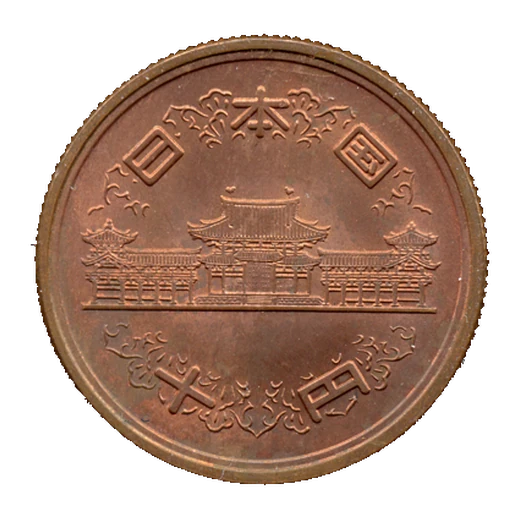
Phoenix Hall · reeded to plain edge
Postwar 10 Yen Transition
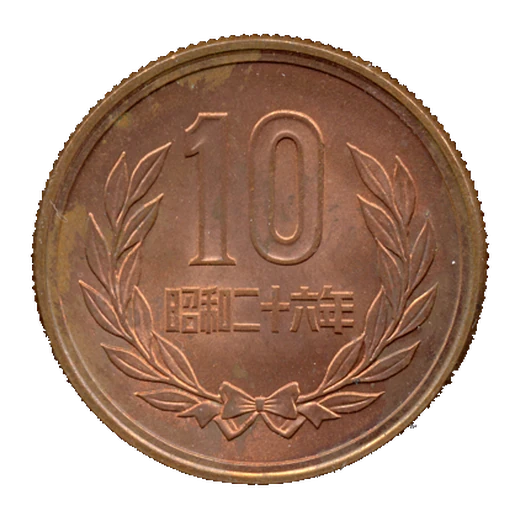
Distinguish the 1951-dated reeded bronze type from the 1959 plain-edge generation while preserving manufacture and issue dates separately.
戦後十円貨幣
- Core routes
- 20
- Issue studies
- 14
- Exact image pairs
- 15
- Indexable routes
- 0
Context
Historical and monetary setting
The official table notes manufacture beginning in 1951 and issue beginning in 1953. The Phoenix Hall design continued when the edge changed in 1959.
Identification
How to classify the object
Confirm the Byōdō-in Phoenix Hall, 23.5 mm diameter, 4.5 g mass, and whether the edge is reeded or plain.
Evidence boundary
What this page does not claim
The unissued 1950 nickel-silver 10 yen is a separate evidence-gated object.
| Series | Production | Legal issue | Material | Edge | Successor |
|---|---|---|---|---|---|
| Reeded-Edge 10 Yen Bronze | 1951 | 1953 | copper | reeded | jp-current-10-yen-bronze |
| Plain-Edge 10 Yen Bronze | 1959 | 1959 | copper | plain | jp-current-10-yen-bronze |
Continue
Related Taisho–Showa references
Evidence
Sources and scope
These links support the claims on this page. Source authority does not imply permission to republish source images.
Official specifications, first-issue years, legal-expiry dates, wartime and postwar regular types.
Open sourceObverse/reverse convention, unissued ceramic status, postwar brass scrap composition, edge changes, and later silver-to-cupronickel transition.
Open sourceUnissued 1918 Yatagarasu 50 sen, 1945 ceramic denominations, and unissued 1950 nickel-silver 10 yen.
Open source