Obverse analysis
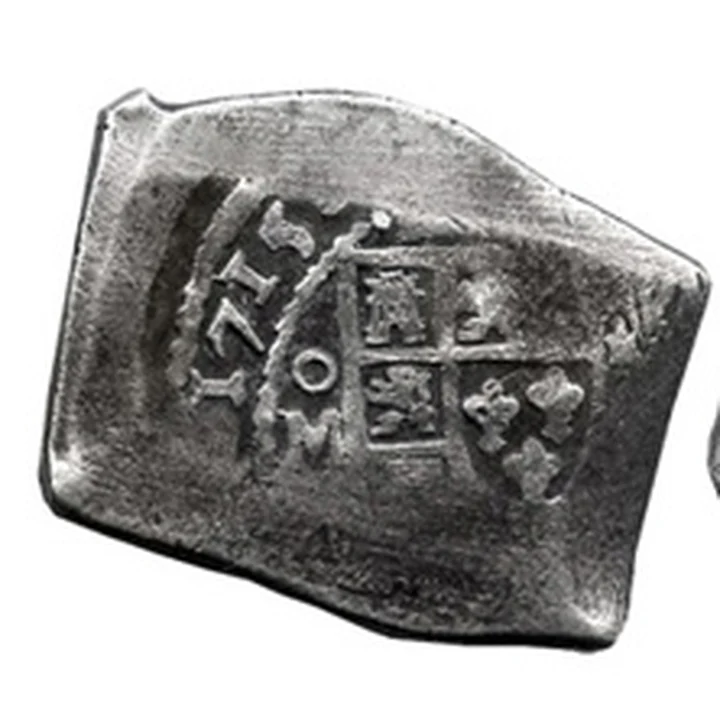
On the shield side, look first for the royal arms, Mexico mintmark, assayer, and denomination. Their positions change across long production and can be lost at the edge; identify a layout before assigning a date range.
Mexico historical series
Mexico City’s cross-and-shield macuquinas turn incomplete strikes into an evidence problem: attribution combines visible date, mint, assayer, denomination, arms, cross, and planchet.
A cob is not defined by a shipwreck. Provenance, seawater exposure, clipping, and visible-design completeness are recorded separately from type.
Series overview
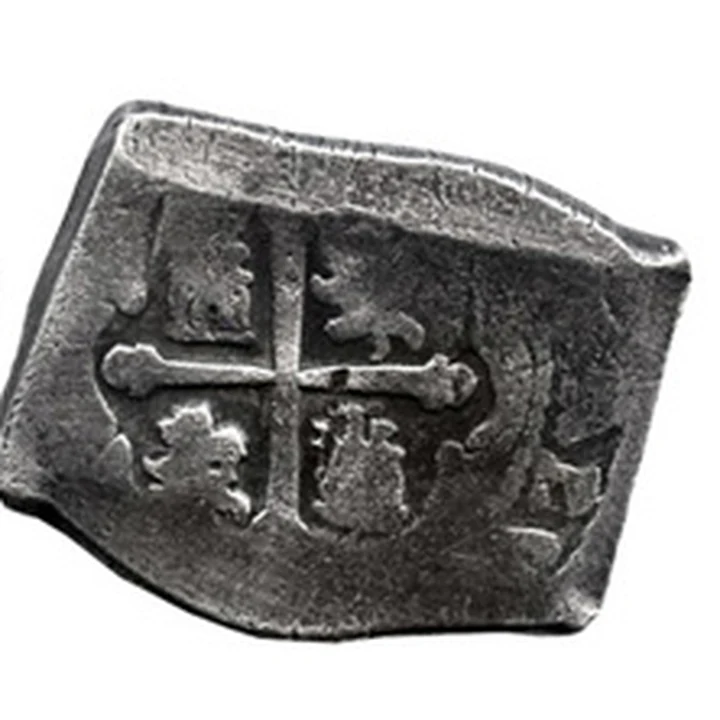
Cob, or macuquina, describes hammered coinage produced from individually prepared blanks rather than a denomination of its own. Mexico City eight reales normally place royal arms on one side and a cross with regional emblems on the other, but off-center blows often leave only fragments.
The cross-and-shield design followed the Charles-and-Joanna tradition under Philip II and continued through Philip V. Hand production made each blank and strike physically individual while the legal standard, authority, dies, and officer marks kept the coin within a controlled monetary system.
Attribution begins with what is actually visible. Record the monarch-compatible shield, cross terminals and quadrants, M°/Mexico mark, assayer letters, denomination 8, date digits, planchet shape, and whether each reading is complete, partial, or inferred from a die match.
On the shield side, look first for the royal arms, Mexico mintmark, assayer, and denomination. Their positions change across long production and can be lost at the edge; identify a layout before assigning a date range.
The cross side is read through the cross shape, castles and lions, surrounding legend fragments, and any visible date. Shield and cross styles can narrow a reign even when the date is incomplete, but style alone should not overrule incompatible marks.
A blank was cut or adjusted to a target mass, placed between dies, and struck by hammer. Off-center design, uneven thickness, split edges, and double strikes can be original; later clipping, filing, tooling, and saltwater corrosion are separate conditions.
Philip II cross-and-shield eight-real tradition begins.
Philip III continuation; issue identity depends on marks and layouts.
Philip IV long reign produces extensive die and assayer complexity.
Charles II issues include late sequences studied through L and J assayer contexts.
Philip V cobs overlap the 1732 introduction of milled pillar coinage.
M, Mo, G, and Ch are resolved only with period, date, denomination, authority, assayer, and source context; no global alias expansion is permitted.
Unknown mintage is blank, not zero. No issue route is created.
| Monarch | Year | Mint | Mintmark | Assayer | Method | Design | Variety | Catalog | Mintage | Confidence | Page |
|---|---|---|---|---|---|---|---|---|---|---|---|
| Philip II | 1572–1598 | Mexico City | M° / contextual Mexico forms | Issue-specific; exhaustive corpus not promoted | Hammer struck | Cross and shield | Shield, cross, legend, and punch families | Specialist issue references required | Unknown — not zero | Series confirmed; issue attribution contextual | No issue page |
| Philip III | 1598–1621 | Mexico City | M° / contextual Mexico forms | Issue-specific | Hammer struck | Cross and shield | Layout and die families | Not merged | Unknown — not zero | Series confirmed | No issue page |
| Philip IV | 1621–1665 | Mexico City | M° / contextual Mexico forms | Issue-specific | Hammer struck | Cross and shield | Long-reign die and mark sequences | Not merged | Unknown — not zero | Series confirmed | No issue page |
| Charles II | 1665–1700 | Mexico City | M° / contextual Mexico forms | L and J occur in studied late sequences; exact span by issue | Hammer struck | Cross and shield | Assayer and layout sequences | Specialist references | Unknown — not zero | Series confirmed; transitions reviewed per piece | No issue page |
| Philip V | 1700–1733 | Mexico City | M° / contextual Mexico forms | J and successor contexts; exact span by issue | Hammer struck | Late cross and shield | Dated, partial-date, and die families | Specialist references | Unknown — not zero | Series confirmed; overlaps milled transition | No issue page |
Use only with compatible reign, marks, and date evidence.
Supports approximate attribution; it is not a variety name.
Recorded separately from grade and type.
Never normalized as a variety.
Scarcity is issue-specific. A complete date or rare assayer combination can matter more than overall wear, but completeness does not by itself prove rarity. This Phase 1 page does not turn marketplace labels into a ranked rarity table.
Describe cross and shield detail, then record visibility of mintmark, assayer, date, and denomination. Separate honest wear from weak strike, clipping, planchet cracks, saltwater damage, corrosion, and cleaning. A visually dramatic shipwreck surface is not a higher technical grade.
Compare mass, alloy response, planchet fabric, hammer-strike flow, die style, and compatible placement of marks. Cast seams, porous duplication, repeated transfer flaws, false patina, added dates, fabricated assayers, and unsupported shipwreck claims require caution. Professional authentication remains the standard for valuable pieces.
Not a substitute for professional authentication.A practical set can progress by monarch or by one readable attribution element. An advanced set combines monarch, approximate or exact date, assayer, shield type, cross type, and visible-design completeness. Store shipwreck provenance as an attached history, never as a variety.
Auction archives are useful for plate matches, pedigrees, and descriptions of visible marks. This build records no normalized realized-price rows because grades, corrosion, clipping, attribution completeness, certification, and buyer’s premium make simple comparisons unsafe.
No Phase 1 realized-price record met the normalization requirements for identity, grade, certification context, currency, premium basis, and retrieved date. Auction sources are used only as contextual evidence until that package exists.Official sequence from Charles-and-Joanna through cobs, pillar and portrait coinage.
Late cob assayer evidence and transition complexity.
Late cob and early milled assayer context.
Specialist attribution example showing why cobs need issue-level evidence.
CC BY-SA 3.0 documentary photograph and stated 1715 Fleet provenance.