Obverse analysis
The globe-and-pillars side shows crowned hemispheres above waves, flanked by the Pillars of Hercules and PLUS ULTRA banners. The VTRAQUE VNUM legend, date, and paired Mexico marks must be checked for issue-compatible form.
Mexico historical series
The columnario combined round milled production, a security edge, paired assayer initials, and the globes-and-pillars design that made Mexico City silver legible across global trade.
The family contains three separate taxonomy series—Philip V, Ferdinand VI, and Charles III—and the page preserves their assayer transitions rather than flattening them.
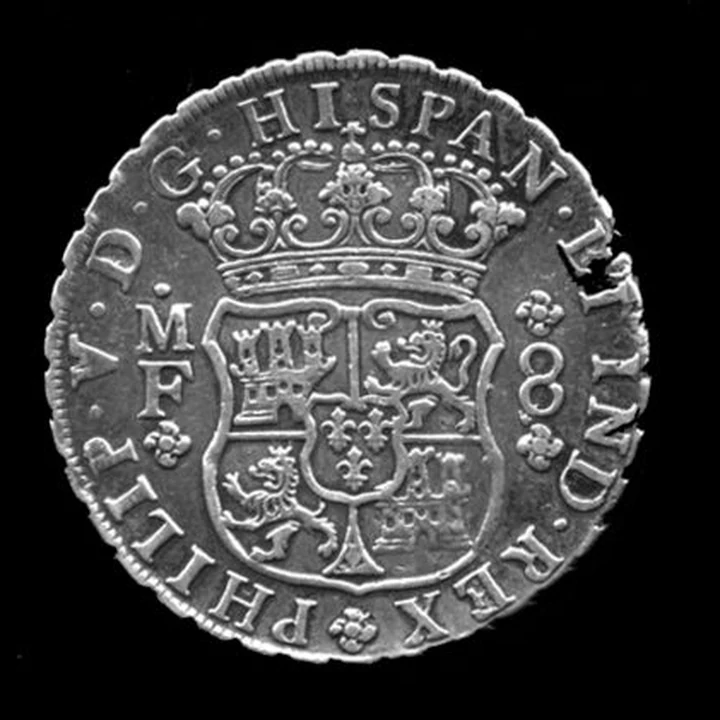
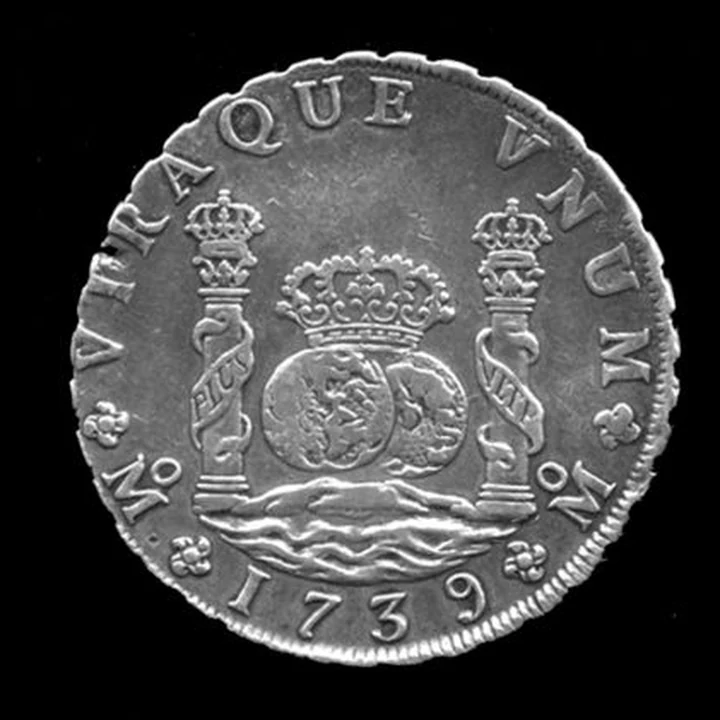
Series overview
The pillar dollar, or columnario, replaced irregular hammered forms with round milled planchets, a more complete design, and a protected edge. The two hemispheres between crowned pillars carried an imperial message while the date, M° mark, denomination, and paired assayer initials made each issue attributable.
A 1728 reform supplied the basis for machinery and standardized production. Mexico City introduced pillar coinage in 1732; specialist history records public circulation late that year and the disappearance of the older format from regular production by the mid-1730s. The pillar design ended in 1771 and portrait silver began in 1772.
The obverse/reverse naming convention varies in literature, so this page describes sides by devices. Read the globe-and-pillars side for date and mint marks; read the crowned-arms side for denomination and assayers. Use the edge as a third design surface.
The globe-and-pillars side shows crowned hemispheres above waves, flanked by the Pillars of Hercules and PLUS ULTRA banners. The VTRAQUE VNUM legend, date, and paired Mexico marks must be checked for issue-compatible form.
The crowned royal arms sit between an assayer pair and the denomination 8. Crown, shield quarters, central devices, legend punctuation, and the exact identity behind reused letter pairs help distinguish monarch and transition issues.
Rounder blanks and a screw press improved alignment and border definition, while the patterned edge deterred undetected clipping. Adjustment marks can be original weight-control evidence; they are not automatically post-mint damage, though later filing must be separated from mint adjustment.
Philip V pillar series; F and MF begin the paired-assayer sequence.
Ferdinand VI series; MF gives way to MM during 1754.
Charles III series; MM, later MF, and FM span the final pillar years.
Portrait coinage replaces the pillar design and silver fineness is reduced under the new standard.
M, Mo, G, and Ch are resolved only with period, date, denomination, authority, assayer, and source context; no global alias expansion is permitted.
1732–1733 · Pillar
specialist-confirmed1733–1754 · Pillar
specialist-confirmed1754–1762 · Pillar
specialist-confirmed1762–1769 · Pillar
specialist-confirmed1770–1777 · Pillar 1770–1771; Portrait from 1772
specialist-confirmedUnknown mintage is blank, not zero. No issue route is created.
| Monarch | Year | Mint | Mintmark | Assayer | Method | Design | Variety | Catalog | Mintage | Confidence | Page |
|---|---|---|---|---|---|---|---|---|---|---|---|
| Philip V | 1732–1746 | Mexico City | M° | F (1732–1733); MF (1733–1754 pair, within reign) | Milled screw press | Globes and pillars / crowned arms | Early mechanical and assayer transitions | Taxonomy: mx-series-philip-v-pillar-eight-reales | Unknown — not zero | Specialist-confirmed series and assayer framework | Series row only |
| Ferdinand VI | 1747–1759 | Mexico City | M° | MF; MM from 1754 transition | Milled screw press | Globes and pillars / crowned arms | 1754 assayer transition | Taxonomy: mx-series-ferdinand-vi-pillar-eight-reales | Unknown — not zero | Specialist-confirmed framework; date varieties remain issue-level | Series row only |
| Charles III | 1760–1771 | Mexico City | M° | MM; MF (1762–1769); FM (1770–1771 pillar use) | Milled screw press | Globes and pillars / crowned arms | Late assayer and transition issues | Taxonomy: mx-series-charles-iii-pillar-eight-reales | Unknown — not zero | Specialist-confirmed framework | Series row only |
Three taxonomy records remain distinct.
F, MF, MM, later MF, and FM require date-compatible pairing.
No complete variety census is claimed in Phase 1.
Availability varies by date, monarch, assayer transition, grade, and surface quality. The page identifies transitions but does not label a key date without a scoped census or specialist rarity source.
Inspect crown, globe, pillar, wave, shield, legend, denticle, and edge detail; then assess luster and high-point friction. Separate central striking weakness and adjustment lines from circulation wear, cleaning hairlines, contact marks, and rim work.
Verify mass, diameter, silver response, edge pattern, die style, paired assayer compatibility, and strike characteristics. Cast fields, repeated transfer defects, soft edge detail, altered dates, added mintmarks, fabricated assayers, or an edge inconsistent with the dies warrant specialist examination.
Not a substitute for professional authentication.A monarch set has three core entries. A deeper Mexico City set follows F, MF, MM, the later MF pairing, and FM while noting that identical letters can represent different officers. Edge condition and original surfaces should be recorded independently from numeric grade.
No live guide value or unsourced record claim is shown. Auction descriptions may support a pedigree, edge variant, or exceptional strike, but prices require a normalized grade, certification, currency, premium basis, date, and variety identity.
No Phase 1 realized-price record met the normalization requirements for identity, grade, certification context, currency, premium basis, and retrieved date. Auction sources are used only as contextual evidence until that package exists.Official sequence from Charles-and-Joanna through cobs, pillar and portrait coinage.
Reform chronology, machinery, fineness, introduction and end dates.
Design elements and Mexico mintmark.
Pillar assayer identities, letter pairs and service spans.
Meaning of paired chief-assayer initials.
Public-domain documentary image and visible issue description.